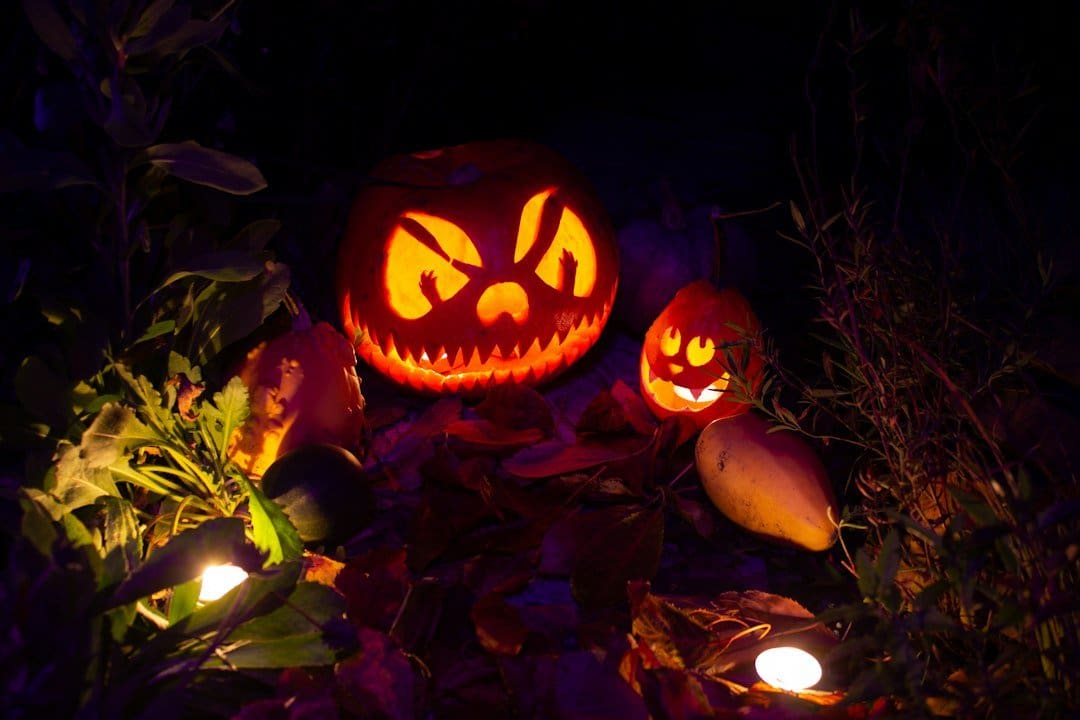
Irish Halloween traditions, from barmbrack and turnip lanterns to the Samhain fires, are a gift to storytellers. Here is what they were and how to use them.
Bonus: Download the free Story Bible Starter Kit and plan your story section by section as you read.
I have always been drawn to the old stories under the new ones, and Halloween is the best example I know. The costumes, the sweets and the carved pumpkins all grew out of Samhain (say "sow-in"), the Gaelic festival that marked the end of the harvest and the start of the dark half of the year.
If you want to write something set around this time of year, the Irish traditions behind it are worth knowing. They go well beyond ghosts and goblins. They are about family, food, fortune, fire and the strange idea that on one night the door between worlds stands open. Here are the ones I find most useful at the writing desk.
The Thin Veil: Why Samhain Mattered
At the heart of Samhain is the idea of the thin veil. On this night the line between the living world and the Otherworld, home of the dead and of the aos sí (the fairy folk), was believed to wear thin. It was not simply a night of terror. It was a night of heightened awareness, when you behaved carefully and kept your wits about you.
I love liminal places and times: twilight, shorelines, doorways. Samhain is the biggest doorway of the year. For a writer, that raises good questions straight away. Is your character meeting a kindly grandparent or a fairy with a grudge? Is the way through a soft light or a cold mist on the bog road? The not knowing is half the power.
Welcoming the Dead, Warding Off the Fairies
Two kinds of visitor were expected. The family dead were welcomed home with warmth and food. The aos sí were treated with caution, because they could bring luck or trouble. That mix of welcome and wariness gives you ready-made tension.
The empty chair. In many homes a place was set, food was left out and the fire was kept in so the dead could find their way back. Picture a character laying a plate for someone they lost, and talking to the empty chair. What do they say? What memory comes back? A small scene like that can carry a whole story about grief and love.
Offerings at the door. The fairies of Irish tradition are not the sweet little creatures of Victorian picture books. They are proud and easily offended. Food and milk might be left out for them, and people took care near fairy forts. What happens if a character forgets, or deliberately refuses? That is a plot.
Food, Fortune and Fun: Barmbrack and Colcannon
Food was at the centre of the night, and a lot of it came with a little fortune-telling baked in. These are the details that make a scene feel lived in: the smell of the kitchen, the knife going through the loaf, the hush while everyone checks their slice.
Barmbrack: The Loaf of Destiny
Barmbrack (bairín breac, a speckled loaf) is a fruit bread that is still sold in every Irish shop in October. Objects were hidden inside, and what you found told your future for the year ahead:
- A ring: you would be married within the year.
- A coin: wealth was coming your way.
- A pea: no wedding this year.
- A stick: an unhappy marriage, or quarrels ahead.
- A scrap of cloth: hard times and poor luck.
Imagine two sweethearts at the table. One finds the ring, the other the rag. Do they laugh it off, or does it sit between them all evening? A game like this shows you what a whole community hoped for and feared.
Colcannon and the Sock on the Door
Colcannon is mashed potato with kale or cabbage, butter and scallions. It too might hide a coin or a ring. In one lovely custom, a young woman would put a spoonful of colcannon in a sock and hang it from the front door, believing the first man through the door would be her future husband. It is a ready-made scene for comedy or romance: who walks in first, and who was hoping to?
+ Join Our Writing Community for FREE
Chain Story Online
Fun, free, flash fiction writing with writers just like you. You have ~100 words to begin a story or continue a story and make it yours.
Story Bible Studio
Digital space for writers to plot, plan, and build better stories. Designed by writers for writers. Your final draft awaits.
Masks, Mummers and Mischief
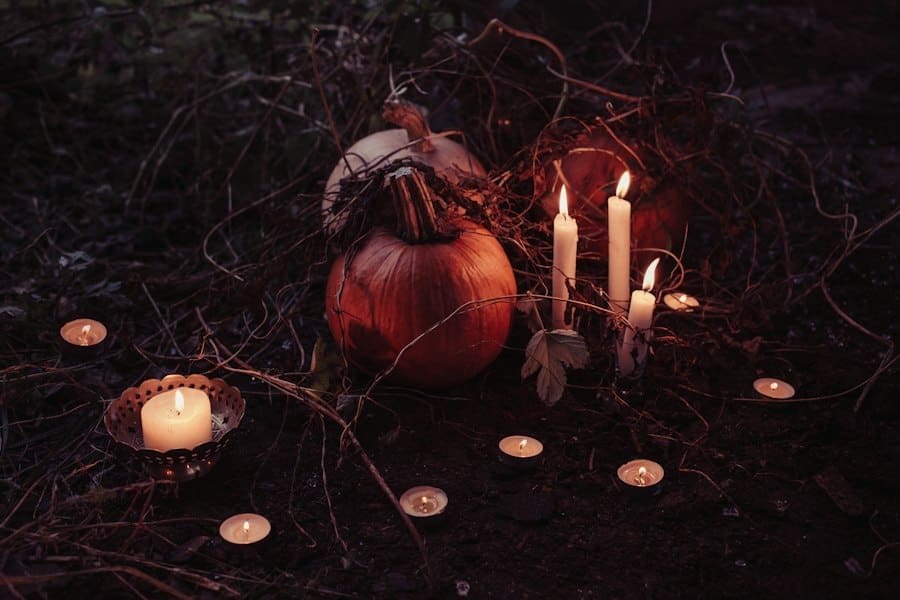
When a child puts on a costume today, they are joining a very old custom. The reasons were once more serious than looking spooky.
Disguise as Protection
One explanation passed down is that a disguise kept you safe: if the spirits abroad that night could not tell you were human, they could not carry you off. The first costumes were simple, perhaps straw, animal skins or a face blackened with soot.
Going from door to door in disguise, with a song, a rhyme or a bit of a performance in exchange for food or a few pennies, is the root of trick-or-treating. In parts of Ireland and Britain the visitors were also given small spiced "soul cakes" in return for prayers for the dead. A group of masked visitors arriving at a lonely house is a strong opening for a story. And what if one of them is not who they seem?
Mummers and Performance
Irish mumming, folk plays performed in disguise from house to house, is more often linked with Christmas and St Stephen's Day, but it shares that spirit of masks and visiting. Mummers' plays were rough, funny and sometimes cheeky about the people in charge. A disguise lets a character say things they never could barefaced.
Stingy Jack and the Turnip Lantern
The jack-o'-lantern comes from an Irish tale. Stingy Jack tricked the Devil more than once. When he died, Heaven would not have him and the Devil would not take him back, so he was left to wander with a single coal in a hollowed turnip to light his way.
Here is a detail worth getting right: the first Irish lanterns were carved from turnips (and sometimes mangelwurzels), not pumpkins. Irish emigrants took the custom to America, where pumpkins were plentiful and much easier to carve. If you are writing historical fiction set in Ireland, use the turnip. Your readers will smell the scorched flesh and feel the ache in their wrists from the carving.
Fire and Community: The Samhain Bonfires
Fire sits at the heart of Samhain. Bonfires were lit on hilltops across the country, and tradition links the most important one to Tlachtga, the Hill of Ward in County Meath. The story goes that hearth fires were put out and then relit from the sacred flame, so every home started the new year with the same fire.
Picture a young person walking home through the dark with a lit torch, shielding it from the wind, knowing the family's hearth depends on them. It is a quiet bit of heroism and a beautiful image to build a chapter around.
Fire was also about cleansing and protection, burning away the old year and guarding people and animals through the winter. (Driving cattle between two fires is a custom more often tied to Bealtaine in May, so keep it there if you want to be accurate.)
Using Irish Halloween Traditions in Your Own Stories
The real lesson from these Irish Halloween traditions is that they are never only about fear. They are about remembrance, community, chance and the turn of the year. Here are three ways in.
Remembrance and grief. The empty chair and the open door make room for stories about loss, memory and unfinished business with the dead.
Community and the stranger. Bonfires, visiting and shared meals all bind a place together. So ask what happens when an outsider arrives on the one night everyone is gathered.
Fate and free will. Barmbrack and colcannon put the future on the table. Does your character accept the ring or the rag, or fight what it says?
Atmosphere Lives in the Details
Use the senses: turf smoke, wet leaves, spiced bread, firelight on a carved turnip, the beat of a bodhrán. A few Irish words such as aos sí or púca add texture, as long as the reader can follow from context. Let the land itself play a part too, with old stones, misty bogs and hills that feel as though they are listening. If you want more of the creatures and storytellers behind all this, start with Ireland's folklore creatures and the seanchaí tradition.
Write Your Own Samhain Story This November
If all this has you itching to write, you are in good time. The Samhain Story Sprint starts with the Bonfire on 31 October and runs through November. New to writing challenges? The Spark group is the gentle way in. If you want a bigger goal, my 30-day novel writing plan breaks 50,000 words into daily steps.
Keep your folklore notes, characters and settings in Story Bible Studio, and if you would rather write with others, try a round on Chain Story Online. Happy Samhain, and may your barmbrack hold the ring.
Ready for November? Sign up free to Story Bible Studio to track your words and run timed sprints, follow the 30-day novel writing plan, and find every detail on the Samhain Story Sprint page.
Related reading: Samhain, the Celtic New Year: Why It Is the Perfect Time to Start Writing · Irish Ghost Stories to Read on a Dark Winter's Night
Enda Storrie is a writer and the creator of Story Bible, the planning journal and app for writers, and Chain Story Online, a free collaborative storytelling platform.
P.S. Enjoyed this? Become an insider and I'll send you one of my favourite posts every couple of weeks.