

My First Glimpse of the Sacred Hill
As a lifelong enthusiast of ancient Celtic history and a self-proclaimed pilgrim to Ireland’s most mystical sites, there are few places that have held a more potent pull on my imagination than the Hill of Ward. For years, its name, whispered in academic texts and folklore collections, has resonated with the deep thrum of primeval power. I imagined it as a desolate, windswept place, imbued with the echoes of ancient rituals, a place where the veil between worlds thinned to a mere whisper. So, when I finally set foot on the emerald isle, my journey to the Hill of Ward felt less like a planned excursion and more like an inevitable return to a forgotten home.
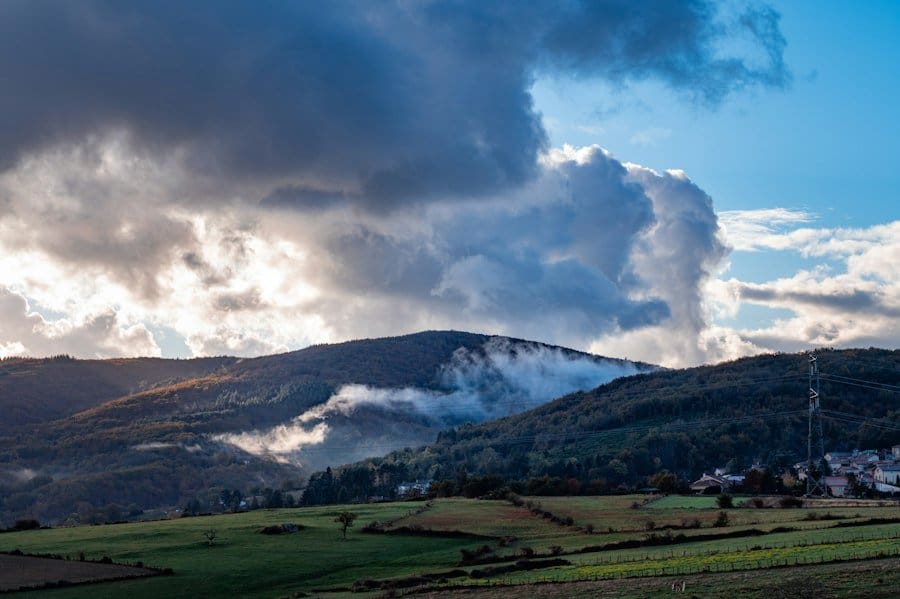
My drive through County Meath was a sensory feast. Rolling hills, impossibly green, stretched out beneath a sky that shifted from pearly grey to brilliant blue in a matter of moments. Ancient hedgerows, thick with history, lined winding roads, their branches reaching like gnarled fingers towards the heavens. I passed stone farmhouses, their chimneys sending tendrils of smoke into the crisp air, and grazing sheep that seemed utterly oblivious to the profound history embedded beneath their hooves. As I approached Athboy, the small town nestled at the foot of the hill, a palpable shift occurred. The air felt charged, a subtle hum beneath the surface of the everyday world. Then, there it was, rising gently from the landscape – the Hill of Ward. It wasn’t the dramatic, craggy peak I had perhaps subconsciously envisioned, but rather a graceful, rounded elevation, its contours softened by millennia of wind and rain. Yet, despite its gentle appearance, an undeniable gravitas emanated from it. I felt an almost electric current pass through me, a sense of deep connection to something profoundly old and utterly sacred. It was more than just a hill; it was a living monument, a repository of memory, a place where the very fabric of time felt thin and permeable. The thought that I was standing where the Samhain fires had been first lit, where the very concept of this pivotal Celtic festival had been forged, sent shivers down my spine.
The Landscape of Ancient Ritual
The immediate area surrounding the Hill of Ward is, to the untrained eye, simply beautiful Irish countryside. However, for those with a keen interest in archaeology and a deep appreciation for the ancient world, it becomes a landscape riddled with clues, a vast outdoor museum. As I walked, I began to notice subtle undulations in the ground, faint traces of earthworks, and the occasional solitary standing stone in the distance. These were not random features; they were whispers of a past when this entire region was a bustling hub of activity, a place of power and ceremony. I could almost hear the murmur of ancient voices, the rhythmic beat of drums, and the crackle of distant fires. The very air seemed to hold an imprint of the countless footsteps that had trodden this ground over thousands of years. It struck me then that the Hill of Ward was not an isolated entity, but rather the beating heart of a complex, interconnected sacred landscape, one that spoke volumes about the sophisticated spiritual beliefs and practices of the people who inhabited this land long before written history. The gentle slopes, the strategic views, the proximity to water sources – all these elements, I realized, were carefully considered, chosen not just for practicality but for their inherent spiritual significance.
In exploring the rich tapestry of ancient Celtic traditions, one can draw intriguing parallels between “The Hill of Ward: Where Samhain Fires Were First Lit” and the article on the ascent of Nephin, which delves into the historical significance of this majestic mountain. The journey to the summit of Nephin not only offers breathtaking views but also connects to the broader narrative of Ireland’s sacred sites and their cultural importance. For a deeper understanding of these connections, you can read more in the article Conquering Nephin: A Walk to the Summit.
Samhain’s Genesis: A Timeless Origin
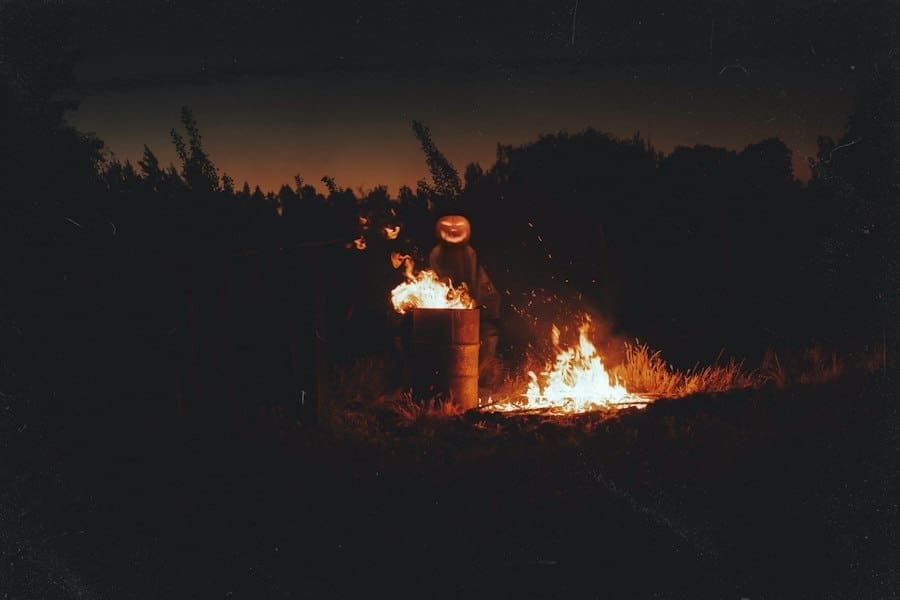
Samhain. The very word evokes images of shadowy figures, crackling bonfires, and the whisper of spirits in the autumn wind. For many, it’s a precursor to modern Halloween, a time for costumes and candy. But here, on the Hill of Ward, the true, profound genesis of Samhain feels undeniably present, an almost tangible force in the crisp autumnal air. This isn’t just a place where Samhain was celebrated; it is the place, the very crucible in which the festival was forged. As I stood there, gazing out over the expansive Meath landscape, I felt a deep sense of privilege, a connection to the ancient Celtic peoples who, millennia ago, gathered on this very spot to mark the turning of the year.
The ancient Celts, like many early agricultural societies, lived in intimate communion with the cycles of nature. Their lives were inextricably linked to the sun, the moon, and the changing seasons. The end of summer, the harvest gathered in, the livestock brought down from the pastures – these were not just practical events; they were momentous transitions, markers in the annual rhythm of life and death. Samhain, occurring roughly between October 31st and November 1st, marked this pivotal moment. It was the end of the bright half of the year and the beginning of the dark half. It was a time of culmination and commencement, a moment when the boundaries between the mundane world and the Otherworld were believed to thin, allowing for communion with ancestors and spirits. And it was here, on the Hill of Ward, that the most significant celebrations, the largest gatherings, and the most potent rituals for Samhain were believed to have taken place. The idea that this unassuming hill, now grazed by sheep, once blazed with fires visible for miles around, drawing people from all corners of the kingdom, is breathtaking to contemplate.
The Sovereignty Goddess and the Festival
Central to the lore surrounding Samhain at the Hill of Ward is the figure of the sovereignty goddess, Ériu (or Éire, after whom Ireland is named), and her association with the local goddess, Macha. These powerful female deities embodied the land itself, its fertility, and the legitimacy of its rulers. It was believed that the king’s right to rule was intrinsically linked to his sacred marriage with the sovereignty goddess, a mystical union that ensured the prosperity of the land and its people. Samhain, as a festival marking the transition between seasons and worlds, was a crucial time for the reaffirmation of this bond.
The rituals enacted here were not merely symbolic; they were vital for the survival and well-being of the community. It was here, during Samhain, that the ‘Feis Teamhrach,’ or the Great Assembly of Tara (though Tara is a distinct site, its importance is often linked to the wider Meath ceremonial landscape), would have potentially held court. While Tara is known as the seat of the High Kings, the Hill of Ward’s role in the spiritual initiation and cyclical renewal of sovereignty, particularly during Samhain, is incredibly significant. The bonfires lit on the Hill of Ward were not just for warmth or light; they were purificatory, protective, and communicative. They were beacons signaling the end of one cycle and the beginning of another, carrying prayers and intentions into the liminal space between worlds.
Fires That Touched the Sky
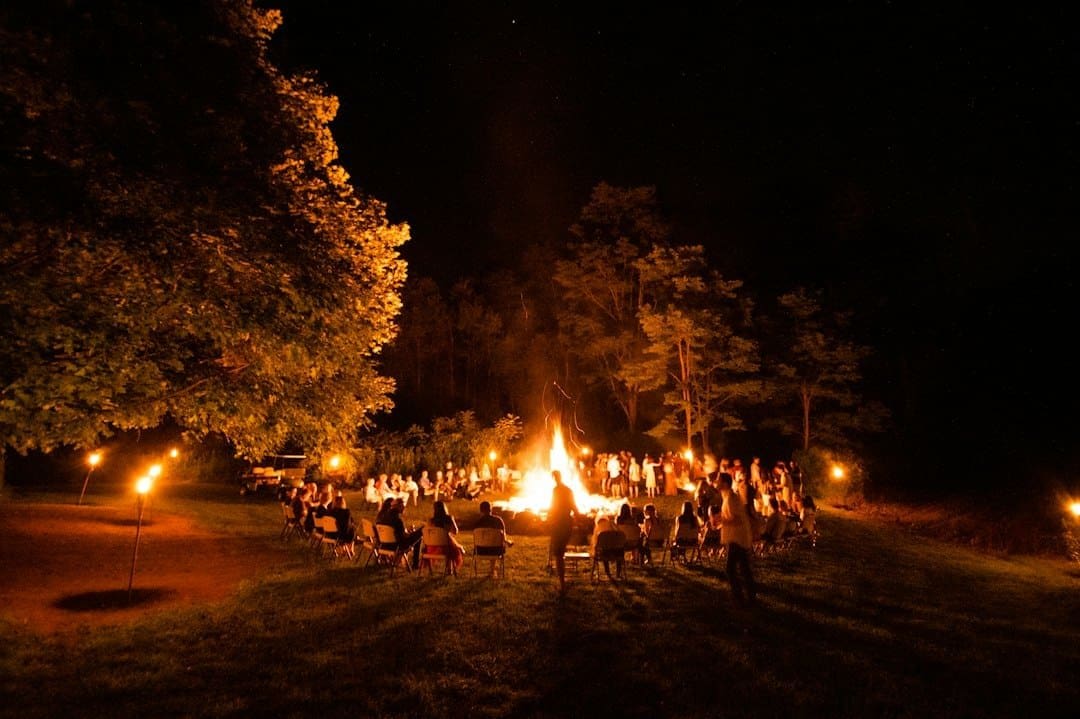
The bonfires of Samhain on the Hill of Ward were legendary. Accounts suggest they were lit from a sacred flame, perhaps housed within a central enclosure, and then carried by runners to other hilltops across the ancient kingdom. Imagine the spectacle: as dusk descended on the final day of October, the first sparks would leap skyward from the summit of the Hill of Ward, a single point of light against the darkening canvas. Then, one by one, other hills in the distance – perhaps the Hill of Tara, Loughcrew, and others – would erupt with their own fiery responses, creating a vast network of blazing signals across the landscape.
This wasn’t just a picturesque display; it was a profound act of communal ritual. The fires served multiple purposes. They offered protection against malevolent spirits believed to roam freely during Samhain. They purified the land and the people, burning away the old and making way for the new. They were also a means of communication, signaling the unity of the tribes and the shared anticipation of the coming year. The smoke, curling upwards, was believed to carry prayers and offerings to the deities and ancestors. Standing on the summit, I could almost feel the heat, hear the roar of the flames, and see the faces of the ancient people, illuminated by the flickering light, their expressions a mixture of awe, reverence, and perhaps a touch of fear as they confronted the mysteries of the season. The power of those fires, born here, on this very ground, truly touched the sky and, I believe, touched the very soul of ancient Ireland.
Echoes of the Past: Archaeological Discoveries
While the romanticized accounts and folklore draw me in, my understanding of the Hill of Ward is grounded in the painstaking work of archaeologists. It’s through their efforts that the whispers of the past begin to solidify into tangible evidence, transforming legend into a deeper, more nuanced history. The Hill of Ward, despite its subtle appearance, is not merely a natural elevation; it is a meticulously crafted landscape, reshaped by human hands over millennia to serve specific ritualistic and communal purposes. This is what truly brings the stories to life for me.
My research prior to visiting emphasized the importance of archaeological surveys and excavations that have taken place on and around the hill. These investigations have revealed a fascinating multi-period site, indicating that the Hill of Ward was a significant location for a very long time, not just during the Iron Age when Samhain gained prominence. This longevity speaks volumes about its inherent power and the enduring human attraction to this particular spot. The discovery of various earthworks, enclosures, and artifacts provides crucial insights into the lives and beliefs of the ancient people who once gathered here.
Unveiling Ancient Structures
One of the most compelling aspects of the archaeological findings concerns the presence of extensive earthworks. While some of these are difficult to discern with the naked eye today, aerial photography and geophysical surveys have been instrumental in mapping out a complex series of banks and ditches. These aren’t random features; they suggest deliberate planning and considerable communal effort. I learned that archaeologists have identified what appears to be a large, roughly circular enclosure on the summit, perhaps dating back to the Bronze Age, though with Iron Age modifications and usage. This primary enclosure would have been a focal point for gatherings, a sacred space defined by its boundaries.
Further down the slopes, other less distinct but equally significant earthworks hint at further enclosures or possibly processional routes. These structures point to a highly organized society with a clear understanding of sacred space and ritual performance. The very act of constructing such earthworks would have been a communal undertaking, fostering social cohesion and reinforcing the spiritual significance of the site. I imagine the ancient people, toiling with primitive tools, shaping the land not just for practical reasons, but to create a physical manifestation of their spiritual cosmology. To stand within the faint outline of these ancient boundaries is to feel a tangible connection to their sacred vision.
Artifacts and Their Stories
Beyond the monumental earthworks, the discovery of artifacts offers intimate glimpses into the lives and practices of the ancient inhabitants. While the Hill of Ward has not yielded the same quantity of spectacular finds as some other sites in Ireland, what has been unearthed provides valuable context. Fragments of pottery, worked flint, and animal bones are common finds in archaeological digs, and their analysis can reveal details about daily life, diet, and even ritual practices. The presence of votive offerings, even if subtle, would speak volumes about the religious beliefs of the people.
Of particular interest are any artifacts that could be directly linked to ritual activity, such as sacrificial objects or items associated with feasting. The analysis of charred wood remains from ancient hearths, for example, can confirm the presence of large fires and provide dating evidence. While I haven’t personally seen the specific artifacts from the Hill of Ward, the knowledge that they exist, carefully cataloged and studied, creates a bridge between the legendary past and the scientifically verifiable. Each shard of pottery, every bone fragment, is a silent witness to a moment in time, a tiny piece of the grand tapestry of human experience on this sacred hill. It reinforces my belief that the stories told about the Hill of Ward are not merely myths, but echoes of real human experiences, deeply rooted in this very soil.
The Enduring Legacy of the Hill
As I left the summit of the Hill of Ward, looking back at its gentle form silhouetted against the setting sun, I carried with me a profound sense of continuity. The Hill of Ward is not just a relic of the past; it is a living testament to the enduring power of tradition, a place where the ancient spirit of Ireland continues to resonate. Its legacy extends far beyond the Iron Age bonfires, subtly influencing our modern understanding of culture, spirituality, and our connection to the land.
The most obvious legacy, of course, is Samhain itself. The festival, born from the agricultural cycles and spiritual beliefs of the ancient Celts, has endured for millennia, albeit in altered forms. From the bonfires and feasting of antiquity to the trick-or-treating and costume parties of contemporary Halloween, the core essence of Samhain—a time of transition, remembrance, and engagement with the supernatural—persists. The Hill of Ward stands as the silent, ancient progenitor of this global phenomenon. To know that the roots of a celebration enjoyed by millions worldwide can be traced back to this unassuming Irish hill is truly astonishing. It underscores how deeply ingrained these ancient traditions are in the collective human psyche.
Samhain’s Transformation to Halloween
The journey from Samhain to Halloween is a fascinating tale of cultural adaptation and syncretism. As Christianity spread across Ireland and eventually throughout Europe, the pagan festivals were not simply abolished; they were often absorbed and transformed. The Christian All Saints’ Day (November 1st) and All Souls’ Day (November 2nd) were intentionally positioned to coincide with Samhain, aiming to recontextualize the pagan observances within a Christian framework. However, many of the core traditions persisted. The lighting of bonfires, the belief in spirits roaming the earth, the communal gatherings, and the sense of a thinning veil between worlds—all found echoes in the evolving Christian holidays.
Over centuries, as Irish immigrants brought their traditions to new lands, particularly to America in the 19th century, Samhain’s customs blended with other cultural practices. The pranks, the costumes, the divination games, and the feasting slowly morphed into the Halloween we recognize today. But beneath the surface of the plastic pumpkins and factory-made costumes, the ancient spirit of Samhain, born on hills like Ward, remains. It’s a powerful reminder that culture is not static; it is a dynamic, evolving tapestry woven from threads of the past and present. The Hill of Ward, in a quiet, unassuming way, is a vital part of that historical narrative, a powerful symbolic origin point.
A Place of Ongoing Reverence
Even today, the Hill of Ward continues to draw visitors and researchers, albeit in smaller numbers than some of Ireland’s more famous archaeological sites. For those who seek a deeper connection to the ancient Celtic world, for those who feel the pull of the past, it remains a place of profound significance. There are still informal gatherings, particularly around the time of Samhain, where people come to acknowledge the ancient traditions, to light small, personal fires (with permission and safety in mind), and to simply feel the presence of the past.
For me, the Hill of Ward is more than just an archaeological site or a historical landmark; it is a place of deep personal reverence. It represents a tangible link to a world where humanity lived in profound connection with nature, where the cycles of the earth dictated spiritual practice, and where community was forged through shared ritual. It is a place that reminds me of the enduring power of belief, the resilience of cultural traditions, and the timeless human quest to understand our place in the cosmos. As I departed, I felt not just that I had visited a historical site, but that I had touched something truly ancient, something that continues to breathe and whisper its secrets across the millennia. The fires of Samhain may no longer blaze on its summit with the same intensity, but the spirit of those original flames, lit right here, continues to illuminate our understanding of who we are and where we come from.
In exploring the rich history of Samhain and its significance in ancient Celtic traditions, readers may find the article on Enda Storrie’s website particularly enlightening. This piece delves into the origins and customs surrounding the festival, offering insights that complement the themes presented in The Hill of Ward: Where Samhain Fires Were First Lit. For a deeper understanding of how these ancient practices have influenced modern celebrations, you can read more about it here.
My Personal Reflection: Standing on Sacred Ground
As I finally took my leave from the Hill of Ward, the sun dipping below the horizon in a spectacular display of oranges and purples, I felt an almost overwhelming sense of gratitude and humility. My long-anticipated journey to this legendary site had been everything I had hoped for, and more. It wasn’t just the historical facts or the archaeological insights that had moved me; it was the visceral, almost spiritual connection I felt to the place itself. Standing on that gentle slope, gazing out at the vast, green landscape of Meath, I could almost feel the presence of those who had come before me, their dreams, their fears, their reverence for the turning of the year.
The Hill of Ward, for me, embodies the very essence of Ireland’s ancient soul. It is a place where the veil between worlds truly feels thin, where the echoes of ancient ceremonies are palpable in the crisp autumn air. I imagined the great bonfires, their flames licking at the night sky, carrying the hopes and prayers of the ancient Celts. I envisioned the communities gathered, their faces illuminated by the flickering light, sharing stories, feasting, and preparing for the long, dark winter ahead. This wasn’t just history; it felt like a living memory, imprinted upon the very earth beneath my feet.
A Journey Through Time
My time on the Hill of Ward was, in many ways, a journey through time. From the earliest settlers who first recognized its strategic importance, through the Bronze Age communities who shaped its contours, to the Iron Age Celts who cemented its place as the birthplace of Samhain, the hill has witnessed countless generations. Each layer of archaeological discovery, each piece of folklore, adds to the rich tapestry of its story. I found myself contemplating the sheer endurance of human belief and tradition, how certain places become imbued with a sacredness that transcends centuries, even millennia. The fact that the fires of Samhain, born here, continue to resonate in modern Halloween traditions speaks volumes about the enduring power of cultural memory and the human need to mark the turning points of the year.
This hill, seemingly unassuming, holds a profound secret: it is a crucible of beginnings. The beginning of the dark half of the year, the beginning of winter, the beginning of a different kind of human understanding of time and spirit. And in its quiet dignity, it continues to hold these truths, waiting for those who are willing to listen.
Leaving with a Renewed Spirit
As I drove away, watching the Hill of Ward shrink in my rearview mirror, I carried with me a renewed sense of connection to the ancient world and to the land of Ireland itself. It wasn’t just a physical journey; it was an internal pilgrimage, a deepening of my understanding and appreciation for the rich tapestry of human history and spirituality. The Hill of Ward, with its gentle slopes and profound legacy, will forever hold a special place in my heart and imagination. It taught me that sometimes, the most powerful and sacred places are not those that dominate the landscape with dramatic peaks, but those that quietly rise from the earth, holding within their contours the echoes of timeless traditions and the very genesis of cultural phenomena. I left feeling not only educated but spiritually enriched, a small piece of the ancient Samhain fire now burning a little brighter within me.
P.S. Enjoyed this? Become an insider and I'll send you one of my favourite posts every couple of weeks.