Deep work at home: plan focus blocks, kill distractions, manage energy and build a routine that lets you concentrate for hours.
Cultivating My Deep Work Sanctuary
The concept of deep work, coined by Cal Newport, resonated with me deeply the first time I encountered it. It promised focused, uninterrupted concentration on cognitively demanding tasks, leading to higher-quality output in less time. For someone like me, who often felt scattered and overwhelmed by the constant digital din, it was a beacon of hope. While Newport's original framework often discussed office environments, my reality, like many others, shifted dramatically with the rise of remote work. Suddenly, my home, once a sanctuary for relaxation, became my primary workspace. This transition, while offering unparalleled flexibility, also presented a unique set of challenges to achieving true deep work.
The distractions were no longer just office chatter; they were laundry cycles, unexpected doorbell rings, and the ever-present allure of the snack cupboard. This article is my personal journey, a candid exploration of how I've strived to transform my home into a haven for deep work, a space where I can truly immerse myself for hours. It’s about the strategies I’ve adopted, the failures I’ve learned from, and the continuous refinement of my approach to achieve that elusive state of flow.
Defining My Deep Work
Before I could even begin to cultivate deep work at home, I had to clarify what it actually meant for me. It wasn't just about sitting at my desk; it was about the quality of my engagement with the task at hand.
Identifying My Deep Work Tasks
I started by listing the tasks that truly required my undivided attention. These were the projects that moved the needle, the ones that, when done well, brought immense satisfaction and tangible results. For me, these often involve complex problem-solving, writing analytical reports, coding intricate algorithms, or crafting detailed presentations. These are the activities that leave me mentally drained but creatively fulfilled.
I realized that responding to emails, attending non-essential meetings, or scrolling through social media, while sometimes necessary, were fundamentally shallow tasks that actively prevented deep work. Distinguishing between the two was my first crucial step. Without this clarity, I found myself applying deep work principles to shallow tasks, which was akin to trying to fill a sieve with water – futile and frustrating.
Understanding My Circadian Rhythms
I've always been a morning person. My peak cognitive performance, I discovered, occurs between 8 AM and 12 PM. This four-hour window is my golden period, a time when my brain feels sharpest and most receptive to tackling complex challenges. Trying to force deep work in the late afternoon, when my energy naturally dips, felt like swimming against the current.
I learned to respect my natural rhythms and schedule my most demanding tasks for these peak hours. This wasn’t always easy, especially when external demands tried to pull me in different directions, but prioritizing my physiological and mental state became non-negotiable for consistent deep work. If a crucial meeting threatened to encroach on this sacred window, I learned to respectfully push back or find an alternative slot.
In the pursuit of enhancing productivity while working from home, the article "Deep Work at Home: How to Focus for Hours" provides valuable insights on maintaining concentration in a remote environment. For those interested in further exploring the dynamics of remote work, including its benefits and drawbacks, a related article can be found at Remote Work: Exploring Benefits & Drawbacks in 2024. This resource complements the discussion by examining the broader implications of remote work on focus and productivity.
Architecting My Environment for Focus

My home environment, initially a minefield of distractions, needed a radical overhaul. I realized that while willpower is finite, a well-designed environment can act as a powerful external force, nudging me towards sustained focus.
The Dedicated Workspace
The single most impactful change I made was establishing a truly dedicated workspace. For a while, I tried working from the couch, the kitchen table, or even my bed, and each attempt ended in fragmented attention and a blurred line between work and leisure.
Physical Separation and Minimalism
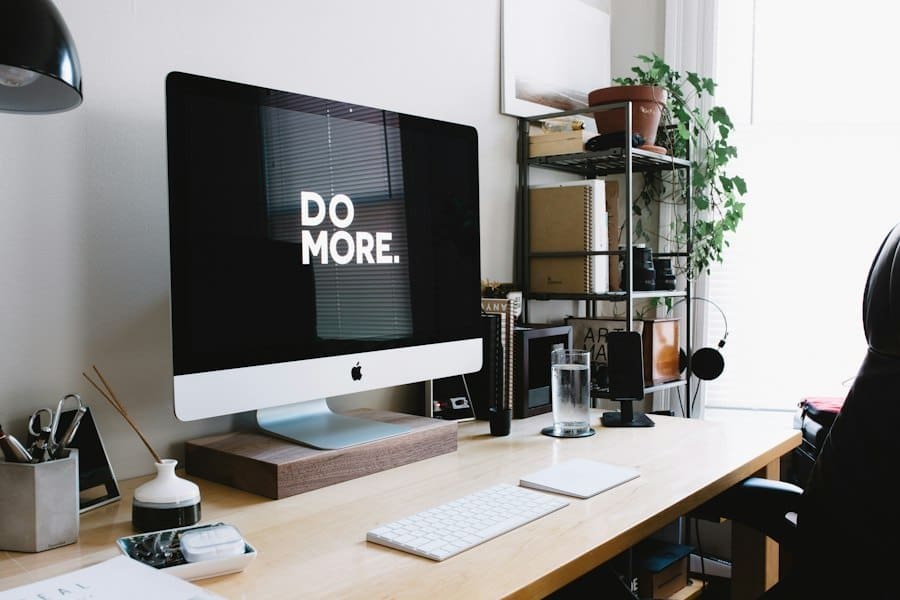
My dedicated workspace is now a small spare room. The key was physical separation. When I step into this room, my brain automatically switches into work mode. I removed everything non-essential from this space. No tempting stacks of books that weren't work-related, no personal mementos that could trigger daydreams, and absolutely no television. The decor is minimalist: a sturdy desk, a comfortable ergonomic chair, a monitor, keyboard, and mouse. The walls are bare, or feature only a whiteboard for brainstorming. This starkness might seem uninviting to some, but for me, it's a visual cue that this space is for one thing only: deep work. The absence of clutter translates directly into an absence of mental clutter.
Optimizing for Comfort and Ergonomics
While minimalism is key, comfort is paramount. I invested in a high-quality ergonomic chair and adjusted my monitor height to ensure proper posture. Discomfort, I learned, is a potent distraction. A nagging backache or strained neck can quickly pull me out of a focused state. I also pay attention to lighting. Natural light is ideal, but when that's not available, I use a warm, diffused light source that mimics daylight. Temperature control is another subtle but critical factor; too hot or too cold, and my focus wavers. These seemingly small details contribute significantly to my ability to sit and concentrate for extended periods without physical discomfort becoming an internal alarm bell.
+ Join Our Writing Community for FREE
Chain Story Online
Fun, free, flash fiction writing with writers just like you. You have ~100 words to begin a story or continue a story and make it yours.
Story Bible Studio
Digital space for writers to plot, plan, and build better stories. Designed by writers for writers. Your final draft awaits.
Minimizing Digital Distractions
In our hyper-connected world, digital distractions are arguably the most insidious. My phone, my email inbox, and the endless expanse of the internet were my biggest adversaries.
Strategic Use of Do Not Disturb and App Blockers
My phone is a weapon of mass distraction. My solution was a zero-tolerance policy during deep work blocks. It goes into another room, on silent, and on "Do Not Disturb" mode. I use app blockers on my computer to restrict access to social media, news sites, and even my personal email during my scheduled deep work sessions.
I experimented with different blockers and found one that allows me to set custom schedules, automatically locking me out of time-sinks when I need to be focused. This external enforcement mechanism prevents me from relying solely on willpower, which I know can be fickle. The urge to check a notification still arises, but the physical and digital barriers prevent me from acting on it, allowing the urge to eventually subside.
Taming the Email Beast
Email, for me, is the ultimate interruptor. I adopted a batching approach. I check and respond to emails only at specific times of the day, usually at the beginning and end of my workday, and sometimes for a brief period in the middle. During deep work, my email client is closed. The fear of missing something urgent was initially a hurdle, but I quickly realized that true emergencies are rare and usually warrant a phone call, not an email. This shift in habit meant fewer context switches, allowing me to maintain my mental model for longer periods. It was a conscious decision to relinquish the instant gratification of an empty inbox for the profound satisfaction of completed deep work.
Cultivating My Deep Work Rhythm
Deep work isn't just about individual sessions; it's about building a sustainable rhythm that integrates into my daily life. This involves scheduling, ritual, and a deliberate approach to rest.
The Power of Scheduling
I treat my deep work blocks like non-negotiable appointments. They are penciled into my calendar, often weeks in advance, and I fiercely protect them.
Time Blocking for Focused Sessions
I use a time-blocking method. My calendar isn't just for meetings; it's a detailed map of my day, with specific blocks allocated for specific tasks. My deep work sessions are usually 90 to 120 minutes long, followed by a short break. I’ve found that shorter bursts are less effective for truly complex tasks, and anything much longer than two hours often leads to diminishing returns. These blocks are color-coded in my digital calendar, making it visually clear that these are sacred times. I resist the urge to fill these blocks with "quick" tasks or impromptu calls. This systematic approach ensures that deep work isn’t just something I hope to do; it’s something I actively plan for and execute.
Strategic Breaks and Their Importance
Breaks are not a luxury; they are an essential component of sustained deep work. I schedule short breaks (5-10 minutes) after each deep work block. During these breaks, I step away from my desk. I might stretch, grab a glass of water, step outside for a breath of fresh air, or even do a quick, non-strenuous chore like folding laundry. The key is to disengage completely from the work.
I also schedule a longer lunch break where I actively disconnect from all screens. These breaks allow my brain to rest and consolidate information, preventing mental fatigue and allowing me to return to my next deep work session refreshed and ready to re-engage. I've noticed that pushing through without breaks often leads to sloppy work and burnout.
Ritualizing My Transition
Transitions are critical. Moving from shallow work to deep work, or from home life to work life, can be jarring. I've developed personal rituals to smooth these shifts.
The Deep Work Kick-Off Ritual
My morning ritual for deep work starts even before I sit at my desk. It involves making a specific type of herbal tea, reviewing my top three priorities for the day, and then putting on a specific playlist of instrumental ambient music. This sequence acts as a psychological trigger, signaling to my brain that it's time to focus. The music, carefully chosen to be unobtrusive yet stimulating, helps drown out ambient household noises and puts me in a meditative state conducive to concentration. This consistency creates a powerful mental association: tea, priorities, music, then deep work. It’s like a mental switch I flip every morning.
Winding Down and Disconnecting
Equally important is the ritual for ending my deep work sessions and the workday itself. I don't just abruptly close my laptop. I take a few minutes to review what I've accomplished, plan the first few tasks for the next day, and then physically put away my work materials. This act of closing things down mentally and physically helps me create a clear demarcation between work and personal time.
I then might take a short walk or engage in a non-work-related hobby. This "shutdown ritual" prevents work thoughts from spilling into my evenings and weekends, protecting my recovery time and preventing mental exhaustion. It’s my way of telling my brain, "You've done your deep thinking for today; now you can rest."
If you're looking for a collaborative writing platform, check out Chain Story Online. It's a great way to connect with other writers and create stories together. Many users have found inspiration and creativity through Chain Story Online.
Navigating the Home-Based Obstacles
While I've optimized my space and schedule, working from home inevitably throws up unique challenges that require creative solutions.
Managing Household Interruptions
My family, bless their hearts, are not intentional distractions, but their presence in the home means occasional interruptions are inevitable.
Communicating Boundaries with Loved Ones
This was perhaps the most challenging aspect to implement. I had to have honest and open conversations with my partner about my deep work blocks. We established a system where, during certain hours, I am effectively "unavailable" unless it's a genuine emergency. This involved explaining the why – why deep work is so important for the quality of my output and my overall well-being. We use visual cues, like a "Do Not Disturb" sign on my office door, and have clear agreements about when it’s okay to interrupt. It wasn't an overnight success; there were certainly instances where the boundaries were tested, but consistent communication and reinforcement have led to a much better understanding and respect for my focused time.
Proactive Problem Solving
I also try to anticipate and mitigate potential interruptions. Before starting a deep work session, I ensure basic needs are met – everyone has had breakfast, I've checked for any immediate family requests, and I've quickly handled any pressing household matters. If I know a delivery is expected, I might schedule my deep work around it or explicitly ask my partner to handle it. The goal is to reduce as many potential interruptions as possible before they even arise, allowing me to fully immerse myself without the nagging thought of an impending domestic task. This pre-work mental preparation is as crucial as the physical preparation of my workspace.
The Lure of Home Comforts
My home is, by design, a place of comfort and relaxation. This intrinsic quality can be a double-edged sword when trying to maintain a high level of work intensity.
Resisting the "Just Five Minutes" Syndrome
The temptation to "just quickly" do a chore, grab a snack, or browse a personal website is constant. I've learned that "just five minutes" almost always morphs into twenty or thirty, completely derailing my flow state. My strategy here is a hard boundary: during deep work, I am only doing deep work. If a non-work thought arises, I jot it down on a scratchpad for later, ensuring it doesn't get forgotten but also doesn't pull me away from my current task. This "capture and defer" method is incredibly effective at preventing those small, insidious interruptions from snowballing.
Strategic Snacking and Hydration
While I aim to resist casual snacking, I recognize the importance of proper nutrition and hydration for sustained cognitive performance. Instead of wandering to the kitchen when hunger strikes, I prepare healthy snacks and a large water bottle before I start my deep work session. This proactive approach means I have what I need readily available at my desk, preventing a trip to the kitchen that could lead to distraction. These small, pre-planned provisions ensure my physical needs are met without breaking my concentration or giving in to the allure of a full pantry.
In the quest for productivity, many individuals find themselves struggling to maintain focus, especially when working from home. A helpful resource that complements the ideas presented in "Deep Work at Home: How to Focus for Hours" is an article that explores the invigorating experience of conquering physical challenges, such as hiking Nephin. Engaging in such activities can provide a refreshing break and enhance mental clarity, ultimately improving one's ability to concentrate during work hours. You can read more about this inspiring journey in the article Conquering Nephin: A Walk to the Summit.
My Journey of Continuous Refinement and Reflection
Deep work at home isn't a destination; it's a continuous journey of learning, adapting, and refining my approach. What works one week might need tweaking the next.
Tracking and Analyzing My Performance
I'm a believer in data-driven self-improvement. To truly understand if my efforts were bearing fruit, I needed to track my progress.
Logging Deep Work Hours and Quality
I keep a simple log of my deep work sessions. I record the start and end times, the specific task I worked on, and a subjective rating of my focus level and the quality of my output. This data is invaluable. It allows me to identify patterns: what time of day am I most effective? Which tasks truly lend themselves to deep work? Are there specific days where my focus is consistently lower? This empirical evidence helps me adjust my schedule and strategies. If I notice a dip in quality, I investigate the potential causes – lack of sleep, poor nutrition, too many interruptions – and make necessary adjustments.
Identifying Distraction Triggers
My log also helps me pinpoint specific distraction triggers. Sometimes, it’s an external noise I hadn’t noticed before. Other times, it’s an internal trigger, like a specific anxiety or a recurring thought. Once identified, I can then develop targeted strategies to address them. For example, if I notice that notifications from a specific app consistently break my focus, I can be more aggressive in blocking it or even uninstalling it during deep work periods. This continuous feedback loop is essential for iterative improvement.
The Importance of Self-Compassion
There are days when, despite all my best efforts, deep work just doesn't happen. The distractions are too numerous, my energy is too low, or my brain simply refuses to cooperate.
Acknowledging Imperfection and Learning
In the beginning, these "failed" deep work days would fill me with frustration and self-criticism. I've since learned the importance of self-compassion. Deep work is a skill, and like any skill, it takes practice, and there will be off days. Instead of dwelling on the failure, I try to analyze what went wrong, acknowledge the external circumstances, and then move on. There's no point in beating myself up; it only makes it harder to try again the next day. This acceptance of imperfection allows me to maintain a positive mindset and prevents me from abandoning the practice altogether.
The Role of Rest and Recovery
Finally, I've come to understand that sustained deep work is impossible without adequate rest and recovery. This means prioritizing sleep, taking actual weekends off, and engaging in hobbies that are completely unrelated to work. Trying to push myself to do deep work when I’m sleep-deprived or mentally exhausted is counterproductive. My brain needs time to process, consolidate, and recharge. Investing in my rest is not being lazy; it is a critical component of my long-term deep work capacity. It’s my fuel for the next session, allowing me to approach each demanding task with renewed energy and clarity. My home, therefore, needs to be not just a space for intense focus but also a true sanctuary for rejuvenation.
Next step: Want to go further? Read the best free tools for remote teams.
Related reading: How to Stay Productive When You Work From Home · How to Manage Your Time When Working From Home
Enda Storrie is a writer and the creator of Story Bible, the planning journal and app for writers, and Chain Story Online, a free collaborative storytelling platform.