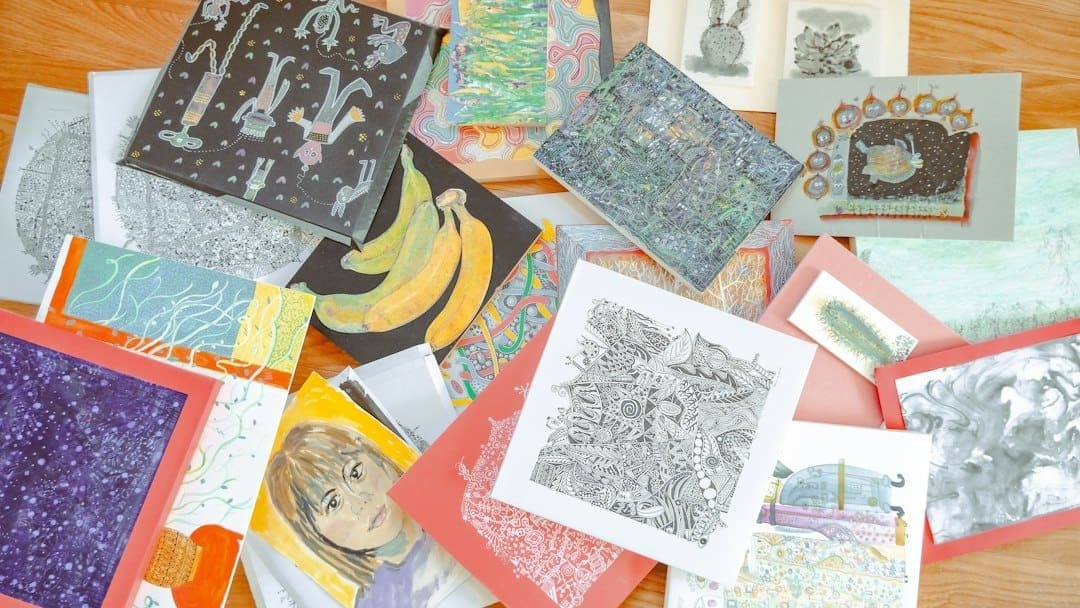
Make your own Christmas cards this year with three easy methods: lino printing, watercolour and collage. Simple supplies, step-by-step tips and no art skills needed.
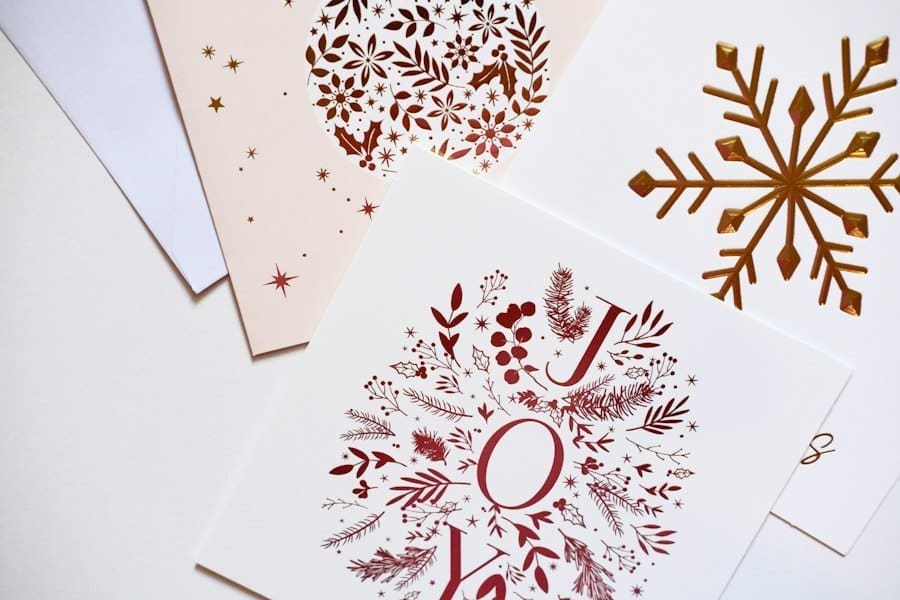
Every year I mean to buy Christmas cards early, and every year I end up in the supermarket queue in mid-December with a box of robins. A few years ago I tried making my own instead, and I haven't looked back. Handmade cards take an evening or two, cost very little, and people keep them long after the shop-bought ones go in the recycling.
You don't need to be an artist. Here are three methods I love, from the most crafty to the most forgiving, plus a few tips for getting them posted on time.
What You Need to Make Your Own Christmas Cards
- Card blanks and envelopes. Pre-scored A6 blanks (folded to A6) fit standard C6 envelopes and save a lot of fiddly cutting.
- Thick paper for painting. If you go the watercolour route, use watercolour paper of around 300gsm so it doesn't buckle.
- A glue stick and double-sided tape. For collage and for mounting finished pieces onto blanks.
- A craft knife, ruler and cutting mat. For neat edges.
- Something festive to work with. Old wrapping paper, music sheets, maps, magazines, ribbon and a bit of gold pen go a long way.
Method 1: Lino Printed Christmas Cards
Lino printing gives you a bold, graphic design you can print again and again, which makes it ideal for a big card list. If you have never tried it, start with my guide to lino printing at home.
Design simply
Choose a shape with a strong outline: a holly sprig, a robin, a star, a fir tree, a cottage with a lit window. Keep fine detail to a minimum on your first go. Remember that the print comes out as a mirror image, so reverse any lettering.
+ Join Our Writing Community for FREE
Chain Story Online
Fun, free, flash fiction writing with writers just like you. You have ~100 words to begin a story or continue a story and make it yours.
Story Bible Studio
Digital space for writers to plot, plan, and build better stories. Designed by writers for writers. Your final draft awaits.
Carve and print
Soft-cut lino is easier on the hands than traditional lino. Carve away everything you want to stay white, always cutting away from the hand holding the block. Roll a thin, even layer of water-based block ink onto the block, place your card on top and press firmly with a baren or the back of a wooden spoon.
Print a few test sheets first. Then print a batch and leave them to dry flat overnight. A sweep of gold or silver pen afterwards makes them sparkle.
Method 2: Watercolour Christmas Cards
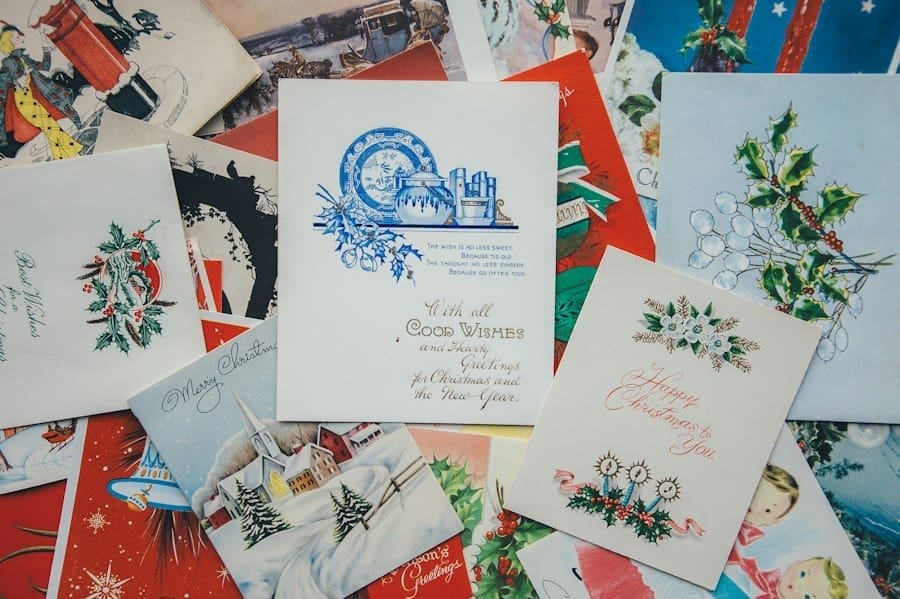
Watercolour is softer and looser, and every card ends up a little different. That is part of the charm.
- Snowy hills. Paint a pale blue or grey sky, leave a white band for snow, then add a line of tiny dark trees along the horizon.
- Baubles. Paint three circles in red, green and gold, let them dry, then add a highlight with white gouache and a string with a fine pen.
- Wreaths. Dab small leaf shapes in a circle with a round brush, add red berries, then finish with a painted bow.
Paint several small designs on one large sheet, cut them out when dry, and mount each onto a card blank. That way a mistake costs you one little square, not a whole card.
Method 3: Collage Christmas Cards
Collage is the most forgiving of the three, and the best one to do with children. Cut shapes from old wrapping paper, maps, sheet music or last year's cards, and arrange them before you glue anything down.
Some ideas: a Christmas tree made from strips of patterned paper; a stack of presents cut from scraps; a winter house with a window cut from gold card. Add buttons, string or a little ribbon for texture, but keep it flat enough to fit in an envelope.
Mixing Methods
The real fun starts when you combine them. Print a lino outline, then add watercolour inside it. Paint a wash for the sky and collage a paper cottage on top. If you enjoy drawing patterns, a border of Celtic knots makes a lovely Irish touch.
Writing and Posting Your Cards
A handmade card deserves a proper message inside. A line about the year, a memory you share or a hope for the next one means more than "Happy Christmas, love from". If you like lettering, a little calligraphy makes the front or the envelope special.
Leave time for posting, especially to friends abroad. An Post publishes its last recommended posting dates each year, and the international ones come round earlier than you think. Check them in late November and work back from there.
Final Thoughts on Making Your Own Christmas Cards
When you make your own Christmas cards, you give people something they will actually keep. Lino printing suits a long list, watercolour gives each card its own character, and collage is easy enough for the whole family. Pick one method, set aside an evening with the radio on and a pot of tea, and enjoy the slower side of the season.
Making things by hand is good for the imagination. If it sparks a story, try a round on Chain Story Online, where you add one passage at a time to a shared tale. And if you're planning something longer, keep your notes together in Story Bible Studio.
Related reading: How to Start Lino Printing at Home · Acrylic Painting for Beginners: Supplies and First Steps
Enda Storrie is a writer and the creator of Story Bible, the planning journal and app for writers, and Chain Story Online, a free collaborative storytelling platform.
P.S. Enjoyed this? Become an insider and I'll send you one of my favourite posts every couple of weeks.