Irish dance explained: the history of céilí and sean-nós, how Riverdance changed everything and where to see or learn Irish dancing.
My First Steps into Irish Dance
When I first encountered Irish dance, it was through the electrifying spectacle of Riverdance. Like so many, I was captivated by the precision, the speed, and the sheer joy radiating from the performers. I remember thinking, "How do they do that?" It felt ancient yet utterly modern, a vibrant explosion of culture on stage. What I didn't realize then was the deep, rich history behind those seemingly effortless movements, a tradition that stretches back centuries, far beyond the glitz and glamour of modern theatrical productions.
My journey into understanding Irish dance began with that initial spark, a curiosity that led me down a fascinating path, from the communal spirit of a céilí to the global phenomenon of professional troupes. I quickly learned that while Riverdance is an incredible ambassador for the art form, it represents a culmination, not the entirety, of what Irish dance truly is. It's a journey I'm eager to share, delving into the nuances and distinct expressions of this captivating art form.
For those interested in delving deeper into the rich traditions and vibrant performances of Irish dance, a related article titled "The Evolution of Irish Dance: From Traditional Roots to Modern Stages" can provide valuable insights. This piece explores the historical context and cultural significance of various Irish dance forms, making it a perfect complement to "Irish Dance Explained: From Céilí to Riverdance." You can read the article by following this link: The Evolution of Irish Dance.
The Foundations: Céilí and Set Dancing
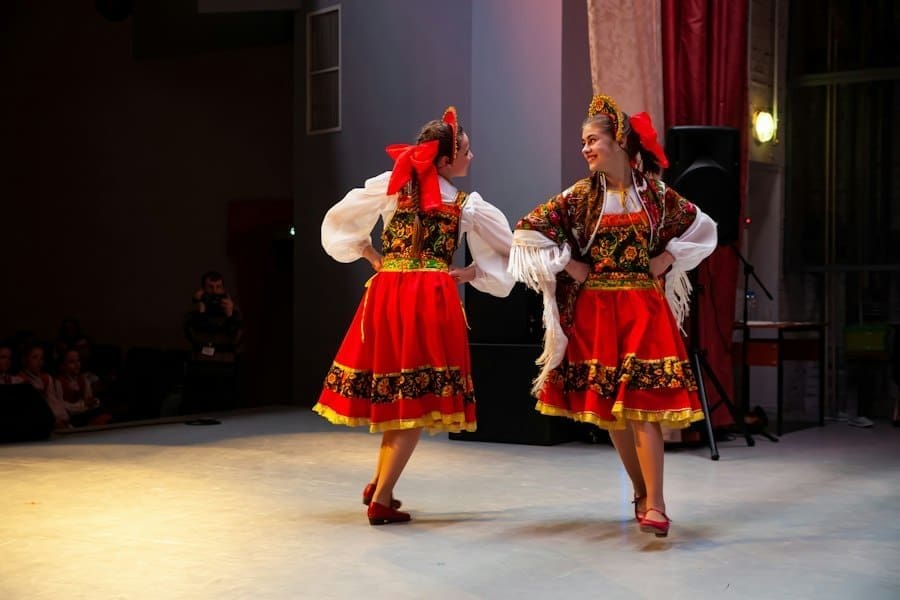
My initial exploration quickly revealed that the roots of Irish dance are firmly planted in communal social gatherings. Before the stages and competitive circuits, there were the kitchens, barns, and crossroads where people gathered to dance for pure enjoyment and social interaction. This is where I encountered the fundamental distinctions between céilí and set dancing, two forms that, while related, offer very different experiences.
The Social Heart of Céilí Dancing
Céilí dancing, to me, embodies the very essence of Irish community spirit. The word 'céilí' itself means a social gathering or party, and the dances reflect this inclusive nature. When I participate in a céilí, I'm struck by its accessibility. The steps are generally simpler than solo dances, focusing more on synchronized group movements and interaction. Most céilí dances are performed by four to sixteen people, often in long lines or circles, making it a fantastic way for beginners to jump in and experience the joy of Irish dance without years of training.
I recall my first time at a local céilí. The atmosphere was electric with live music – a fiddle, a bodhrán, a flute – and the caller, an experienced dancer, guided everyone through the steps with clear instructions. We danced the "Siege of Ennis," a lively longways dance, and the "Walls of Limerick," which involves forming sets of four. The emphasis was on having fun, moving together, and connecting with the music. There was no judgment, only encouragement.
This communal aspect is what I find most endearing about céilí. It's about participation, about keeping a tradition alive through shared experience, rather than striving for competitive perfection. The steps, while energetic, are designed to be learned relatively quickly, allowing everyone to feel part of the dance. It's a living tradition, evolving slightly with each generation, but always maintaining its core identity as a social and celebratory event.
The Intricacies of Irish Set Dancing
Moving from the broader strokes of céilí to the more defined patterns of set dancing, I discovered a different kind of communal engagement. Set dancing, I learned, is performed by four couples arranged in a square, known as a "set." It's derived from French quadrilles, which were introduced to Ireland in the 19th century and then adapted to Irish music and dance styles. What fascinates me about set dancing is its regional variation. Unlike céilí dances, which have become somewhat standardized across Ireland, set dances retain strong regional characteristics, reflecting the unique musical and cultural flavors of different counties like Clare, Kerry, or Cork.
When I observe or participate in a set dance, I notice the greater complexity in footwork and figures compared to céilí. While still social, there’s a higher degree of precision required, as each couple executes specific movements within the set. The figures can be quite intricate, involving weaving patterns, turns, and interactions between couples, all performed to specific reels, jigs, or polkas. I find the rhythms incredibly infectious.
The music drives the dancers, and the subtle variations in timing and ornamentation within the dance itself are a testament to the dance's deep connection with traditional Irish music. Learning a set dance often involves memorizing a sequence of movements for each "figure" within the dance, and a set typically has several figures. It's a more challenging but equally rewarding experience, demanding coordination and a keen ear for the music. The beauty lies in the intricate interplay of the eight dancers, moving as a single, cohesive unit.
+ Join Our Writing Community for FREE
Chain Story Online
Fun, free, flash fiction writing with writers just like you. You have ~100 words to begin a story or continue a story and make it yours.
Story Bible Studio
Digital space for writers to plot, plan, and build better stories. Designed by writers for writers. Your final draft awaits.
The Art of Solo Irish Dance
My journey into Irish dance wouldn't be complete without understanding its solo forms. While céilí and set dancing emphasize community, solo Irish dance, particularly competitive step dancing, places a spotlight on individual skill, precision, and artistry. This is the form that often comes to mind when people think of the highly athletic and visually striking aspects of Riverdance.
Hard Shoe Dancing: The Rhythmic Powerhouse
When I first saw hard shoe dancing, I was utterly mesmerized by the rhythmic percussion created by the dancers' feet. The hard shoe, with its fiberglass or resin tips and heels, acts as an instrument, allowing the dancer to produce a complex tapestry of sounds against the floor. This is where the iconic "clickity-clack" sound of Irish dance truly comes alive. I learned that mastering hard shoe dancing requires immense strength, control, and musicality. Each step, each beat, is deliberate and precise.
My understanding deepened when I spoke to a competitive dancer about the nuances. They explained that it's not just about making noise; it's about making music. The intricate rhythms, syncopations, and variations in volume and tempo are what differentiate a good dancer from a great one. Dances like the hornpipe and the treble jig are performed in hard shoes, each with its distinct time signature and stylistic requirements. The hornpipe, typically in 2/4 or 4/4 time, often has a slightly slower, more deliberate feel, allowing for powerful, percussive footwork.
The treble jig, usually in 6/8 time, is faster and livelier, demanding incredible agility and rapid-fire footwork. I admire the dedication required to perfect these dances. Dancers spend countless hours practicing "trebles," "clicks," "rolls," and "shuffles," striving for absolute clarity and impact in their rhythms. The upper body remains largely still, arms held rigidly at the sides, emphasizing the incredible work of the lower body. This posture, though initially seemingly restrictive, actually draws all attention to the intricate footwork, highlighting the true artistry of the percussive performance.
Soft Shoe Dancing: Grace and Agility
In stark contrast to the percussive power of hard shoe, soft shoe dancing offers a different kind of beauty: one of grace, elevation, and effortless movement. Dancers wear "ghillies," which are soft, black leather shoes resembling ballet slippers, allowing for silent, fluid movements. When I watch soft shoe dancers, I'm struck by their apparent weightlessness. They seem to defy gravity, leaping, spinning, and gliding across the stage with incredible agility.
The dances performed in soft shoes, primarily the reel and the slip jig, each have their own distinct character. The reel, typically in 2/4 or 4/4 time, is fast-paced and energetic, characterized by quick, light steps, often involving high leaps and intricate footwork. The slip jig, usually in a flowing 9/8 time, is considered the most graceful of the solo dances. It demands incredible balance and flexibility, featuring long, elegant movements, extended leaps, and beautiful air work.
What I find captivating about soft shoe dancing is the illusion it creates. Despite the intense physical exertion, the dancers project an image of serene effortlessness. Their legs seem to move independently of their bodies, creating a mesmerizing visual spectacle. The lightness of the steps, the height of the leaps, and the precision of the turns all contribute to a feeling of ethereal beauty, a perfect counterpoint to the grounded, rhythmic power of hard shoe.
If you're looking for a collaborative writing platform, check out Chain Story Online. It's a great way to connect with other writers and create stories together. Many users have found inspiration and creativity through Chain Story Online.
The Competitive World of Feiseanna
My understanding of Irish dance wouldn't be complete without exploring the competitive landscape, known as feiseanna (pronounced 'fesh-anna'). These competitions are a cornerstone of the solo Irish dance tradition, fostering skill, discipline, and a pathway for dancers to achieve recognition and progress. From my perspective, a feis is far more than just a competition; it's a vibrant gathering, a community event where dancers of all ages and skill levels come together to celebrate their passion.
Levels and Progression
I've learned that the competitive structure of Irish dance is highly organized and hierarchical, designed to allow dancers to gradually hone their skills. Dancers begin at the Beginner level, progressing through Novice, Prizewinner, and then into the Open Championship ranks. This system ensures that dancers are competing against peers of similar ability, providing achievable goals and a clear path for improvement. As a dancer myself (albeit an amateur one!), I appreciate this structured approach. It provides motivation and a tangible measure of progress.
At each level, dancers compete in specific dances, such as the reel, light jig, slip jig, and treble jig, with the requirements becoming increasingly complex and demanding. To move up a level in a particular dance, a dancer must place in the top percentage of their competition (the exact number varies by region and organization). This continuous challenge is what drives many dancers to push their limits, refining their technique, stamina, and stage presence. It's a journey of constant learning and self-improvement, where each victory, no matter how small, is a testament to dedication.
Judging and Scoring
Understanding how feiseanna are judged provides insight into what makes a competitive Irish dancer truly stand out. Judges look for a combination of elements, including technique, timing, rhythm, execution, and overall stage presence. I've observed that impeccable turnout (the rotation of the leg from the hip), pointed toes, straight legs, and a rigid upper body (with arms held firmly at the sides) are paramount. Any deviation from these strict technical requirements can result in deductions.
Musicality is also crucial; dancers must stay perfectly in time with the live music, and their steps should reflect the nuances of the tune. The execution of specific steps and movements must be clean, precise, and powerful. Beyond the technical aspects, judges also consider the dancer's energy, confidence, and how they present themselves on stage. A dancer who truly embodies the joy and spirit of the dance, even while maintaining strict technique, often scores higher. The pressure is immense, I imagine, but the ability to perform under scrutiny, to deliver a flawless routine, is a skill honed through years of practice and performance. Each feis is a learning experience, providing valuable feedback for dancers to refine their craft.
If you're interested in exploring the cultural richness of Ireland beyond its dance traditions, you might find the article on hiking in Ireland particularly captivating. It delves into the experience of conquering Nephin, one of the country's stunning peaks, offering insights into the breathtaking landscapes that inspire both artists and dancers alike. You can read more about this adventure in the article Conquering Nephin: A Walk to the Summit.
From Stage to Spectacle: The Rise of Riverdance
My journey into Irish dance wouldn't be complete without acknowledging the phenomenon that is Riverdance. For many, myself included, it was the gateway drug, the initial spark that ignited an interest in this rich cultural art form. Its impact on Irish dance, and on Irish culture globally, cannot be overstated.
The Genesis of a Global Phenomenon
I remember the excitement when Riverdance first burst onto the scene. It wasn't just a show; it was an event. It all began as a seven-minute interval act at the 1994 Eurovision Song Contest in Dublin. I recall being stunned by the sheer power and synchronicity of the performance. The lead dancers, Michael Flatley and Jean Butler, with their incredible speed and charisma, redefined what Irish dance could be. The groundbreaking choreography, which blended traditional steps with a modern, theatrical sensibility, captured the world's attention.
The immediate and overwhelming positive reaction led to the development of a full-length stage show. What made Riverdance so revolutionary, in my opinion, was its willingness to break from some of the more rigid conventions of traditional Irish dance while still honoring its essence. It introduced elements of theatricality, dramatic lighting, and a dynamic musical score that incorporated other global influences. It presented Irish dance in a way that was accessible and captivating to a worldwide audience, elevating it from a niche cultural activity to a global stage spectacle. It took the fundamental elements I've described – the precision of step dancing, the communal spirit, and the infectious music – and amplified them to an unprecedented degree.
Riverdance's Lasting Legacy and Influence
The impact of Riverdance has been profound and far-reaching. I've seen firsthand how it created a surge of interest in Irish dance globally. Suddenly, children and adults around the world wanted to learn to jig and reel. Dance schools experienced unprecedented enrollment, and the competitive feis circuit expanded significantly. It legitimized Irish dance as a serious art form in the eyes of the wider public and paved the way for other successful Irish dance shows like Lord of the Dance.
Beyond its commercial success, Riverdance also fostered a renewed sense of pride in Irish culture, showcasing its vibrancy and dynamism to an international audience. It demonstrated that tradition could be both preserved and innovated upon, appealing to both purists and newcomers. For me, Riverdance served as a powerful reminder that cultural art forms are not static; they evolve, adapt, and can reach new heights of expression. While some traditionalists initially harbored reservations about its theatrical liberties, I believe its overall contribution has been overwhelmingly positive, introducing countless individuals to the beauty and energy of Irish dance, and ensuring its continued vitality for generations to come. It’s a testament to how deeply ingrained and adaptable this art form truly is.
Related reading: Irish Traditional Music: A Beginner's Guide to the Session · Public Art in Ireland: Sculptures and Murals Worth a Detour
Enda Storrie is a writer and the creator of Story Bible, the planning journal and app for writers, and Chain Story Online, a free collaborative storytelling platform.