How to start an art journal even if you can't draw: simple supplies, page ideas, collage and doodles that make creativity a daily habit.
Embracing the Blank Page: My Journey to Art Journaling
For years, I admired the beautiful art journals I saw online and in magazines, filled with intricate drawings, vibrant watercolors, and poetic hand-lettering. My heart yearned to create something similar, to have a visual record of my thoughts, feelings, and experiences. There was just one, rather significant, problem: I couldn't draw. Not really. My stick figures were debatable, and anything more complex usually ended in frustration and a crumpled piece of paper. The idea of starting an "art journal" felt incredibly intimidating, a pursuit reserved for the naturally talented, the folks who could effortlessly sketch a lifelike portrait or paint a breathtaking landscape. I truly believed I was not one of them.
But then, something shifted. I kept seeing these journals, not just the professional-looking ones, but also the messy, imperfect, and deeply personal ones. I started noticing how many people emphasized the process over the product, the act of creation over the final masterpiece. A quiet voice in my head began to whisper, "What if it's not about being 'good' at art, but about simply making art?" This question, small as it was, became the crack in my wall of self-doubt.
It allowed a tiny sliver of curiosity to peek through. I realized that my inability to draw shouldn't be a barrier to expressing myself visually. If an art journal is a space for self-expression, then surely there are countless ways to express oneself beyond traditional drawing. This article is my story, my guide, and my encouragement to anyone who, like me, believes they can't draw but longs to start an art journal.
It's about finding your own unique visual language, discovering the joy of the process, and understanding that perfection is not only unnecessary but often counterproductive to the very essence of art journaling. I want to share the practical steps I took, the mindset shifts I embraced, and the techniques I learned to transform my fear of the blank page into a vibrant, evolving personal sanctuary.
If you're looking to enhance your creativity and find inspiration for your art journal, you might also enjoy reading about the journey to conquer Nephin Mountain in the article "Conquering Nephin: A Walk to the Summit." This piece beautifully captures the essence of nature and exploration, which can serve as a great source of motivation for your artistic endeavors. You can check it out here: Conquering Nephin: A Walk to the Summit.
Essential Tools to Get Started (No Fancy Art School Supplies Required)
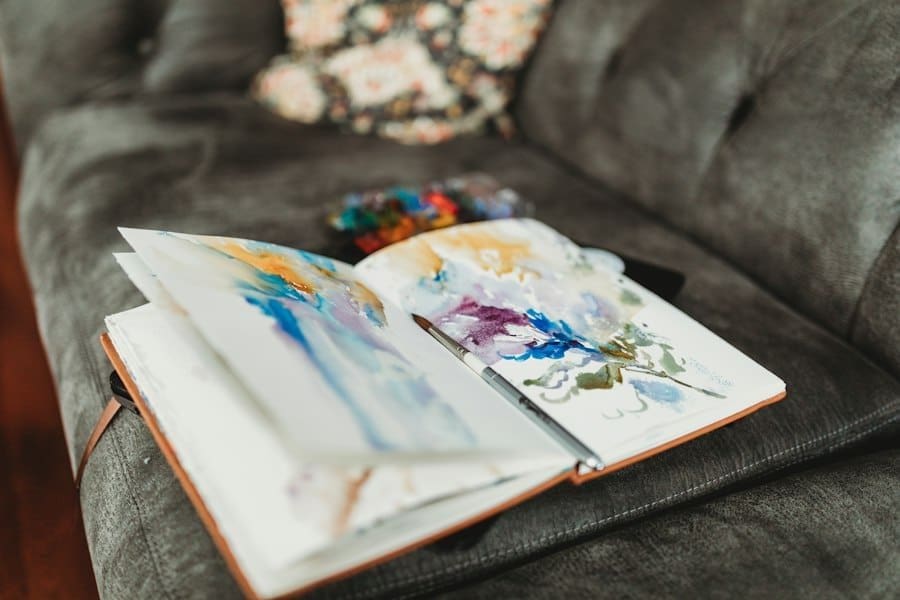
When I first considered art journaling, my immediate thought was that I'd need a huge array of expensive art supplies. Visions of professional-grade paints, dozens of brushes, and fancy pens danced in my head, further fueling my apprehension. I imagined spending a fortune only to create something I hated, confirming my belief that I was not an artist. Thankfully, I learned quickly that this couldn't be further from the truth.
The beauty of art journaling, especially when you're just starting and think you can't draw, is that you can begin with incredibly basic, often household, items. My initial toolkit was surprisingly minimal and budget-friendly, and it served me well as I explored different techniques and discovered what I enjoyed. You certainly don't need to break the bank to embark on this creative journey.
Choosing Your First Journal
The most fundamental tool, of course, is the journal itself. This is where your creations will live, so choosing one that feels right in your hands is important. When I started, I gravitated towards something that wasn't too precious, so I wouldn't feel pressured to make every page perfect.
Spiral-Bound vs. Hardcover
I started with a simple, spiral-bound sketchbook. The spiral allowed the pages to lie completely flat, which I found incredibly helpful when working with different mediums and wanting to get into every corner of the page. It also meant I didn't feel the weight of a 'proper' book, which strangely reduced my performance anxiety. However, many people prefer hardcover journals for their durability and aesthetic. My advice?
Go to an art supply store or even a general stationery store and just feel them. Flip through the pages. See what size feels comfortable for you. I found an A5 size (roughly 6x8 inches) to be a good starting point – not too small to feel cramped, but not so large that it felt overwhelming to fill a page.
Paper Quality Matters (A Little)
While you don't need top-tier watercolor paper, opting for something with a bit of weight (around 100-150gsm, or 60-90lb) can prevent bleed-through, especially if you plan to use markers or light washes of paint. My first journal had paper that was okay, but I quickly upgraded to one with slightly thicker pages, and it made a noticeable difference in my enjoyment and the versatility of the mediums I could use. Don't obsess over it, but if you have the option, slightly thicker paper is a good choice.
Basic Writing and Drawing Implements
Remember, the goal isn't to draw masterpieces, but to express yourself. This means any tool that makes a mark is fair game.
Pens and Markers
I started with a simple black fineliner pen (like a Micron or a Faber-Castell Pitt Artist Pen) and a few colored felt-tip pens I already owned. The fineliner was great for outlining, writing, and adding details, while the felt-tips brought in much-needed color. Don't underestimate the power of a ballpoint pen either; they're readily available and can create interesting textures. As I got more comfortable, I added a white gel pen, which is fantastic for adding highlights and details on darker backgrounds.
Pencils
A good old graphite pencil (HB or 2B) is indispensable for light sketching, planning layouts, or adding subtle shading. An eraser is, of course, its trusty companion. I also found that colored pencils were a fantastic, low-mess way to add color and texture without needing to master paints. They're very forgiving and easy to blend.
Adding Color and Texture
This is where the magic really starts to happen, even without drawing skills. Color and texture are powerful expressive tools.
Craft Paints or Watercolors
You don't need professional artist paints. A basic set of children's watercolors or a few tubes of inexpensive acrylic craft paint (the kind you find at discount stores) are perfect. I started with a small set of pan watercolors and just a couple of round brushes. Watercolors are wonderfully fluid and transparent, allowing for beautiful layering. Acrylics, on the other hand, are opaque and cover well, making them great for creating backgrounds or adding bolder elements. Don't forget a water pot and some paper towels!
Glue Sticks and Scissors
These are your best friends for collage! I can't stress this enough. Collage is a fundamental technique for non-drawers, and these tools are essential. Any standard glue stick will do, and a pair of craft scissors (or even kitchen scissors) is perfectly fine.
Found Papers and Ephemera
This is where the fun really begins and where you can personalize your journal without drawing a single line. Start collecting! Magazines, newspapers, old books (check if they're okay to cut up first!), junk mail, product packaging, gift wrap, fabric scraps, old tickets, receipts, dried leaves, even candy wrappers. These items bring instant color, texture, pattern, and often, a story, to your pages. My first collages were made from magazine cutouts and old postcards, and they were incredibly liberating.
Optional, But Helpful Additions
As I progressed, I gradually added a few more items that enhanced my journaling experience, but they are by no means essential when you're just starting.
Stencils and Stamps
These are fantastic for adding recurring patterns, shapes, or motifs without having to draw them. You can find inexpensive stencils at craft stores, or even make your own by cutting shapes out of cardstock. Small rubber stamps (alphabet stamps, geometric shapes, or simple designs) are also great for adding repetitive elements and visual interest.
Washi Tape
Oh, washi tape! It's decorative masking tape, comes in countless patterns and colors, and is incredibly versatile. It's great for adding borders, attaching bits of paper, creating visual breaks, or simply adding a pop of color and pattern. It's low-commitment because it's easily removable.
White Gesso
If you get into using a lot of wet media (paints, inks), gesso can be a game-changer. It's a primer that seals your paper, preventing bleed-through and giving a better surface for paint. I found it especially useful when I wanted to create a colored background that I could then write or draw on top of without the previous layer showing through too much. It essentially gives you a fresh, clean canvas on any page.
The key takeaway here is to start small. Don't feel pressured to buy everything at once. Use what you have, experiment, and slowly build your collection as you discover what you enjoy using most. My initial investment was probably less than twenty dollars, and it opened up a whole new world of creative expression for me.
Liberating Your Inner Artist: Mindset Shifts for Non-Drawers
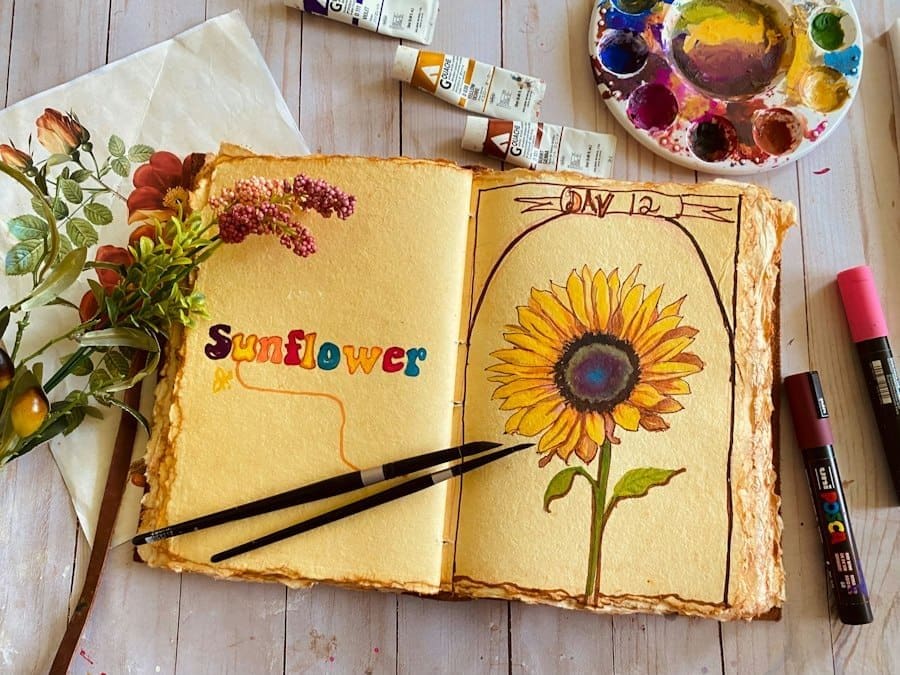
This section, for me, was perhaps the most crucial. It wasn't about the tools I had, but the mental barriers I needed to dismantle. For years, my self-identity was "not an artist," rooted deeply in my perceived inability to draw. Overcoming this was a process of deliberate reframing and a conscious effort to challenge my own limiting beliefs. If you, like me, feel that internal resistance, know that it's a common hurdle, but one that can absolutely be overcome. It requires a shift in perspective, a willingness to be imperfect, and a generous dose of self-compassion.
Redefining "Art" and "Artist"
The biggest mental block I faced was my narrow definition of what art is and who an artist can be. I pictured classical paintings, realistic sculptures, and intricate illustrations. If it wasn't a perfect representation of reality, I didn't consider it art. And if I couldn't create such a thing, I couldn't be an artist. This was a profoundly limiting belief.
Art as Expression, Not Perfection
I slowly began to understand that art, at its core, is simply expression. It's a way to communicate thoughts, feelings, and experiences visually. It doesn't have to be beautiful in a conventional sense, it doesn't have to be technically perfect, and it certainly doesn't have to be realistic. My art journal became a private space where I could explore textures, colors, shapes, and words without any external judgment.
It was about the feeling of creating, the act of putting something down on the page, rather than the final product. Once I let go of the idea that my journal pages had to look a certain way, a huge weight lifted. I started to see beauty in the imperfect, the messy, the spontaneous.
Everyone is Creative
Another powerful realization was that creativity isn't a rare gift bestowed upon a select few; it's an innate human capacity. We all have it, even if we've been told (or have told ourselves) otherwise. My creativity might not manifest as a masterful drawing, but it could manifest in the way I layered papers, chose a color palette, or arranged words on a page. Embracing this truth meant acknowledging my own inherent creative potential, even if it didn't align with traditional artistic skills. It was about giving myself permission to play and explore, just as a child would, without the burden of expectation.
+ Join Our Writing Community for FREE
Chain Story Online
Fun, free, flash fiction writing with writers just like you. You have ~100 words to begin a story or continue a story and make it yours.
Story Bible Studio
Digital space for writers to plot, plan, and build better stories. Designed by writers for writers. Your final draft awaits.
Embracing Imperfection and Process
This was perhaps the hardest mindset shift for me. I'm naturally a bit of a perfectionist, and the idea of creating something "bad" was paralyzing. My art journal taught me to let go.
There Are No Mistakes, Only Discoveries
This mantra became incredibly important to me. When a line went crooked, or a color bled unexpectedly, my initial reaction was frustration. But then I'd pause and ask myself, "How can I work with this? Can I cover it? Can I incorporate it into the design? Can it become an interesting texture?" More often than not, these "mistakes" led to some of my most unique and unexpected pages. A smudge became a shadow, an accidental splash became a background texture. This mindset transformed my fear of error into an exciting opportunity for improvisation and discovery. It taught me resilience and adaptability in my creative process.
Focusing on the Journey, Not the Destination
My art journal isn't a portfolio; it's a record of my journey. Each page captures a moment, a thought, a feeling, a discovery. The value isn't in how beautiful each page is in isolation, but in the cumulative story it tells. I stopped trying to create a "finished" piece on every page and instead focused on the experience of making. What colors did I enjoy playing with? What textures felt good under my fingers? What thoughts emerged as I worked? This process-oriented approach made art journaling incredibly therapeutic and deeply satisfying, regardless of the aesthetic outcome.
Cultivating Curiosity and Playfulness
Children are natural artists because they play without judgment. They experiment, they make messes, and they delight in the process. As adults, we often lose that playful spirit. Reclaiming it was vital for my art journaling journey.
Experimentation is Key
I started viewing my journal as a laboratory, a safe space to try new things without fear of failure. What happens if I layer watercolors over collage? What if I use a toothbrush to splatter paint? What if I write my thoughts backwards? This spirit of experimentation led to countless discoveries and helped me develop my own unique visual language. I found that the more I experimented, the more confident I became, and the more "tools" I added to my non-drawing repertoire.
Letting Go of Comparison
This is a tough one, especially in the age of social media where beautiful art is constantly scrolling past. I had to consciously stop comparing my raw, imperfect journal pages to the polished, curated images I saw online. My journal is for me, by me. It's a reflection of my inner world, not a competition. When I felt myself falling into the comparison trap, I would remind myself that everyone is on their own creative journey, and their "finished" product doesn't invalidate my process. Focusing on my own progress and the joy I derived from creating became paramount.
By consciously adopting these mindset shifts, I transformed my relationship with art and creativity. I stopped seeing my inability to draw as a barrier and started seeing it as an invitation to explore other forms of visual expression. This mental liberation was truly the cornerstone of my successful journey into art journaling.
My Go-To Techniques for Non-Drawers
Once I had my basic tools and, more importantly, my new mindset firmly in place, the next step was to actually do something on those blank pages. This is where many aspiring art journalers who can't draw get stuck. They have the journal and the pens, but they don't know where to start because the traditional "drawing" path feels blocked. I quickly discovered a wealth of techniques that allowed me to create visually rich and meaningful pages without ever needing to sketch a recognizable object. These methods became my creative vocabulary, a way to tell my story and express my emotions in a visual language that felt authentic to me.
The Power of Collage
Collage is, without a doubt, the superhero technique for anyone who thinks they can't draw. It allows you to build complex and interesting compositions using pre-existing images, patterns, and textures. It's incredibly forgiving and surprisingly versatile.
Gathering Materials
My first step into collage was simply to start collecting. I scoured old magazines for interesting colors, textures, words, or snippets of images. Travel brochures, junk mail, old calendars, even product packaging – anything with visual interest became fair game. I also loved using pages from old books, particularly for their texture and the interesting juxtaposition of text with other elements. Don't be afraid to cut things up and see what happens.
Layering and Adhering
The beauty of collage lies in layering. I often start by tearing pages from magazines into interesting shapes, or cutting out specific images that resonate with me. Then, I arrange them loosely on the page, moving them around until a pleasing composition emerges. I don't aim for perfection; sometimes a slightly askew piece adds character.
Once I'm happy with the general layout, I glue them down with a simple glue stick. I often use an acrylic medium (like Mod Podge) over the top, especially if I plan to add paint or ink, as it seals everything in and gives a nice finish. Don't be afraid to overlap, to cover parts of images, or to let pieces extend beyond the edge of the page.
Adding Your Own Marks
Even with collage, I still add my own personal touch. After the collage elements are down, I might use a fineliner pen to doodle around the edges of the images, add texture with scribbles, or connect disparate elements with simple lines. I might use a white gel pen to add highlights or write short phrases on top of darker areas. This blend of found imagery and my own simple marks makes the page truly mine.
Expressive Mark-Making and Doodling
You don't need to draw a specific object to make interesting and expressive marks. Think of mark-making as abstract drawing, or simply playing with lines, shapes, and textures.
Lines, Dots, and Swirls
I often start a page by simply doodling. I might use a black pen to draw a series of parallel lines, create a pattern of dots, or fill a space with swirling, organic shapes. These aren't meant to represent anything; they're just an exploration of movement and form. Different pens and markers create different types of lines – thick, thin, fuzzy, crisp. Playing with these variations can add a lot of visual interest to a page.
Texture Through Repetition
Repeating a simple mark over and over again can create a surprising amount of texture. Think about cross-hatching with a pen, stippling with dots, or drawing tiny, overlapping circles. These are techniques anyone can do, and they add depth and visual richness to a page without requiring any drawing skill. I often use these repetitive marks to fill in spaces, define areas, or create backgrounds.
Scribbling as Release
Sometimes, I just need to get energy out. Scribbling, without any particular goal, can be incredibly cathartic. I might use a crayon, a marker, or even a pencil to just make vigorous, uncontrolled marks on the page. This chaotic energy can then be incorporated into the page, perhaps partially covered by collage, or contrasted with more controlled elements. It's a wonderful way to begin a page, breaking the intimidating blankness with raw expression.
Playing with Paint and Color
Color is a powerful tool for expressing emotion and creating atmosphere, and you don't need to be a painter to use it effectively.
Washes and Layers
My favorite way to use watercolors or watered-down acrylics is through simple washes. I apply a thin, even layer of color over a whole page or a specific section. This creates a beautiful, translucent background. Once that layer is dry, I might add another wash of a different color, allowing them to blend and create new hues. I love how unpredictable washes can be, with colors flowing and mingling in unexpected ways. This layering technique builds depth without any intricate painting.
Splattering and Dripping
For a more dynamic effect, I sometimes use splattering. I load a brush with watered-down paint and tap it over the page, creating a shower of tiny dots. For drips, I might apply a blob of paint and then tilt the page, letting gravity do the work. These techniques add an element of chaos and energy, breaking up any stiffness on the page and adding spontaneous texture. It's pure play, and the results are always unique.
Color Blocking
Sometimes, I simply use blocks of color to divide a page or to highlight certain areas. I might paint a solid rectangle of blue, then a solid rectangle of yellow next to it. This creates a graphic, modern look without requiring any blending or shading skills. It's all about the interplay of colors and shapes, rather than realistic representation.
Incorporating Text and Hand-Lettering
Words are inherently expressive, and including them in your art journal is a powerful way to add personal meaning, even if you don't consider yourself a calligrapher.
Simple Writing
I often just write directly on the page in my regular handwriting. It's authentic, personal, and immediately imbues the page with my voice. I might write down thoughts, quotes, song lyrics, or observations. The act of writing itself can be meditative. Don't worry if your handwriting isn't "perfect"; it's part of your unique style.
Experimenting with Fonts and Sizes
Even without drawing, you can vary the appearance of your text. I experiment with different pens (fine, thick, brush pen) and different sizes of letters. I might write some words really big and bold, and others very small and delicate. I also play with uppercase and lowercase, and even write words vertically or diagonally. This variation adds visual interest and emphasizes certain words or phrases.
Found Text
Just like with images, I love to incorporate found text. Cutting out interesting words or phrases from magazines, newspapers, or old books is a fantastic way to add a typographic element to your page without writing a single word yourself. I often arrange these cut-out words into a poetic phrase or a stream of consciousness.
By combining these techniques – collage, mark-making, paint play, and text – I found that I could create richly layered, deeply personal, and visually compelling art journal pages without ever having to "draw" in the traditional sense. It's a continuous journey of exploration and discovery, and each new page brings fresh insights into my own creative capabilities.
If you're looking to explore your creativity through art journaling but feel intimidated by your drawing skills, you might find inspiration in a related article that discusses various techniques for self-expression. This resource offers practical tips and encourages you to embrace your unique style, regardless of your artistic background. You can check it out for more insights on how to enhance your art journaling experience by visiting this link.
If you're looking for a collaborative writing platform, check out Chain Story Online. It's a great way to connect with other writers and create stories together. Many users have found inspiration and creativity through Chain Story Online.
Prompts and Ideas to Overcome the Blank Page Syndrome
The blank page can be an intimidating beast. Even with my newfound confidence and collection of techniques, there were still moments when I'd stare at an empty spread and my mind would go utterly blank. This "blank page syndrome" is universal, not just for those who can't draw. The trick I learned was to have a few simple prompts and starting points ready. These aren't meant to be rigid instructions, but gentle nudges to get the creative juices flowing, to break that initial inertia and get some marks, any marks, onto the page.
Starting with Color and Texture
When my brain feels empty, I often bypass the need for an idea and go straight for sensory input.
Color Palette Exploration
"Pick three colors that represent your mood today." This is a fantastic starting point. I'll grab those three colors in paint, markers, or even colored pencils and just start swatching them, blending them, or creating simple blocks of color on the page. I don't think about what I'm making; I just focus on the colors and how they interact. This often leads to an unexpected background or a color scheme for the rest of the page.
Textured Backgrounds
Instead of starting with an image or a thought, I sometimes start with texture. "Create a textured background using only things you can find in your recycling bin." This might involve gluing down crumpled tissue paper, corrugated cardboard, or even a piece of old netting. Once glued, I might paint over it with a thin wash of color, letting the texture show through. Or, "Use gesso and a palette knife (or an old credit card) to create an uneven surface." The tactile experience of creating texture is very grounding and often sparks other ideas.
Layering with Found Paper
"Fill the page with torn pieces of paper from magazines or old books." I simply start tearing and gluing. I don't aim for a specific image or theme, just interesting colors, patterns, or snippets of text. Overlapping the pieces creates a layered effect. This technique immediately covers the intimidating white space and provides a rich foundation for further embellishment.
Using Words as Your Foundation
If visual ideas aren't flowing, words often are. The beautiful thing about an art journal is that it's a visual and written record.
Single Word or Quote
"Choose one word that resonates with you today, and make it the focal point of your page." It could be "breathe," "hope," "chaos," "peace." I might write the word in different sizes and fonts, repeat it, or surround it with textures and colors that reflect its meaning. Similarly, a short quote or a line from a song can be a powerful starting point. I might cut it out from a magazine, write it myself, or even stencil it onto the page.
Stream of Consciousness Writing
"Just write for five minutes without lifting your pen." Don't worry about grammar, spelling, or even coherence. Just let whatever comes to mind flow onto the page. This free-writing exercise is incredibly cathartic and often reveals hidden thoughts or feelings that can then become the basis for visual elements. I sometimes write in a spiral, or fill a defined shape with text, turning the words themselves into a visual pattern.
A List of Gratitude or Intentions
"Create a list of five things you're grateful for, or five things you hope to achieve today/this week." I then write these items on the page, perhaps in different colors or sizes, and surround them with small doodles, collage elements, or simple shapes. This turns the page into a positive affirmation or a visual reminder of my goals.
Daily Life and Observation Prompts
My art journal is also a reflection of my everyday life, and finding inspiration in the mundane can be incredibly enriching.
Color of Your Day
"What color best represents your day so far? Why?" I'll fill a page with that color, perhaps varying the shades, and then write a few sentences explaining my choice. This links my internal emotional landscape to a visual representation.
Quick Sketch of an Everyday Object (or its Essence)
Even without drawing skills, you can capture the essence of an object. "Look at an object near you – your coffee cup, a plant, your keys. Don't try to draw it perfectly, but try to capture its shape with simple lines, or its texture with scribbles, or its color with a wash." It's not about accurate representation, but about observation and interpretation. I might draw a wobbly outline of my coffee cup, then fill it with swatches of the colors I see in it.
Documenting Small Moments
"What's one small detail from your day that you want to remember?" It could be the pattern of light on the floor, the sound of rain, the taste of your lunch. I might then find images in a magazine that evoke that detail, or simply write about it and surround the text with abstract marks that reflect the feeling. This makes the journal a beautiful record of daily life, without needing artistic skill.
Emotion-Based Prompts
Sometimes, the best way to start is to tap into what I'm feeling. My art journal is a safe space for all emotions.
Abstracting an Emotion
"Choose an emotion you're feeling right now (joy, frustration, calmness, anxiety) and represent it with colors, shapes, and lines, without drawing anything recognizable." If I'm feeling anxious, I might use sharp, jagged lines, dark, messy colors, and overlapping, chaotic shapes. If I'm feeling calm, I might use soft, flowing lines, gentle blues and greens, and open, airy compositions. This is pure, unadulterated visual expression.
Journaling Your Fears or Hopes
"What's one fear you have? Or one hope you hold?" I might write down the fear, then physically cover it with layers of paint or collage, symbolizing overcoming it. Or I might write my hope, then surround it with bright, uplifting colors and images. This turns the journal into a tool for processing and manifesting.
The key to all these prompts is to let go of the need for a "good" outcome. They are simply starting points, invitations to play, experiment, and get something down on the page. The act of creation itself is the goal, and often, one small mark or one simple word is all it takes to banish the blank page syndrome and unlock a flood of creativity.
Making It a Habit: Integrating Art Journaling into Your Life
Starting an art journal is one thing; consistently engaging with it, making it a regular part of your life, is another. For me, the real magic happened when art journaling became a habit, a gentle ritual I looked forward to. It wasn't about spending hours on every page, or even working on it every single day. It was about finding a rhythm that fit my life, making it accessible, and understanding that even five minutes of creative play could be incredibly beneficial. This section is about how I integrated my art journal into my daily routine, moving it from an occasional experiment to a cherished practice.
Small Bites, Big Impact
My initial idea of art journaling involved long, uninterrupted blocks of time, which felt impossible with my busy schedule. I quickly realized this was a self-imposed barrier.
The Five-Minute Challenge
This was a game-changer for me. I decided that even five minutes of art journaling was better than none. I'd set a timer and just create for that short burst. Sometimes it was just laying down a wash of paint, other times it was gluing down a few collage elements, or simply writing a short thought. The beauty was that these small sessions often led to more extended ones if time permitted, but even if they didn't, I still felt a sense of accomplishment and creative engagement. It broke down the intimidation of needing "enough" time.
"Touch Your Journal" Principle
I also adopted a "touch your journal" principle. Even if I didn't have time to create, I'd make a point to open my journal, flip through a few pages, maybe look at some of the blank ones. This kept it present in my mind and reduced the psychological barrier of "starting" a new session. It was a gentle reminder that my creative space was always there, waiting for me.
Creating a Conducive Environment
Making art journaling easy to access was crucial for fostering a habit. If I had to pull out a huge box of supplies every time, I knew I wouldn't do it.
Keeping Supplies Accessible
I designated a small "art journal station" on a corner of my desk. My journal, a few pens, a glue stick, a small watercolor set, and some often-used collage bits were always within arm's reach. This eliminated the friction of setup and cleanup. If I felt a sudden urge to create, or had a spare five minutes, everything was right there. It minimized excuses.
A Designated Space (Even a Small One)
You don't need a dedicated art studio. My "station" was just a small tray on my desk. What mattered was that it was my space for creativity, however small. It psychologically signaled that this activity was important and had a home. It became a little sanctuary where I could retreat for a few minutes.
Embracing the Imperfect Consistency
Perfectionism, again, was the enemy of habit. I had to let go of the idea that every page needed to be a masterpiece or that I needed to journal every single day.
Forgiving Gaps
There were days, even weeks, when I didn't touch my journal. Instead of guilt-tripping myself (which would only make me less likely to return), I simply picked it up again when I felt ready. I learned that consistency wasn't about unbroken streaks, but about returning to the practice, again and again, with kindness and understanding. The journal is a friend, not a taskmaster.
No Pressure for "Good" Pages
I reminded myself constantly that my art journal was for me, and for exploring. Some pages would be better than others, some would be messy experiments, some would be just scribbles. All of them were valid. This reduced the pressure to perform and allowed me to show up authentically, whatever my creative energy level was that day. It wasn't about producing Instagram-worthy content, but about personal process and growth.
Using Prompts and Rituals
Having a few simple rituals and prompts made it easier to jump in, especially on days when inspiration felt distant.
Daily Check-In Prompts
Sometimes, I'd start my journal session with a simple check-in: "How do I feel right now, in three words?" or "What's one thing I'm thinking about?" This immediate reflection provided a starting point for either words or abstract visual expression. It anchored my creative time in my current reality.
End-of-Day Reflection
For a while, my art journal became part of my evening wind-down routine. A few minutes before bed, I'd open it up and reflect on the day, perhaps choosing a color to represent it, or gluing down a small piece of ephemera that symbolized an event. It was a gentle way to process and archive my experiences.
Connecting to Other Hobbies
I started noticing how art journaling could intersect with other parts of my life. If I read an interesting book, I might paste in a quote. If I went for a walk, I might collect a leaf and glue it in. This made the journal feel less like a separate activity and more like an integrated reflection of my life.
By embracing these strategies – small consistent efforts, accessible tools, forgiving imperfections, and gentle prompts – art journaling transformed from a daunting aspiration into a deeply fulfilling and accessible habit. It became a powerful tool for self-reflection, stress relief, and creative expression, proving that you truly don't need to be able to draw to be an artist of your own life story.
Related reading: Art Therapy at Home: Simple Creative Activities for Stress · How to Make Time for Creativity When Life Is Busy
Enda Storrie is a writer and the creator of Story Bible, the planning journal and app for writers, and Chain Story Online, a free collaborative storytelling platform.