

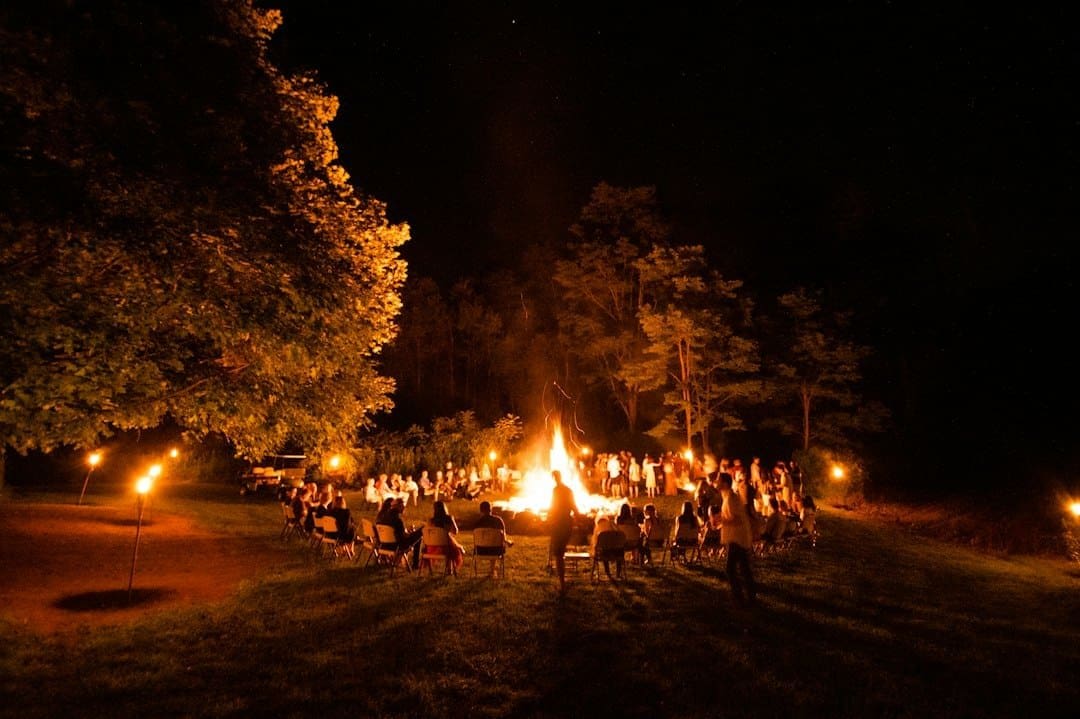
The Hill of Ward near Athboy in County Meath is ancient Tlachtga, where the Samhain fires were lit. Here is its story, what was found there and how to visit.
Tonight is Samhain, and there is no better night to tell you about a quiet green hill in Meath. Most people drive past it on the road out of Athboy without a second look. It isn't tall and it isn't dramatic. But if the old stories are right, this is where the fires of Samhain were first lit, and every bonfire you see across Ireland tonight is a distant cousin of that one.
Where Is the Hill of Ward?
The Hill of Ward sits about 2 km east of Athboy in County Meath. Its old name is Tlachtga (roughly "TLOCK-ta"), and you'll see both names used locally. On top is a large circular earthwork: a series of banks and ditches, one inside the other, that you can still trace on foot if you walk slowly and look at the shape of the ground.
It is part of the same royal landscape as the Hill of Tara and Loughcrew, both a short drive away. Tara was the seat of kings. Tlachtga was something different: a place of fire, linked to the turning of the year.
The Legend of Tlachtga
The hill takes its name from Tlachtga, daughter of the druid Mug Ruith. In the stories she travelled with her father and learned his magic, and she died on this hill after giving birth to triplets. Her name stayed with the place, and so did her association with fire.
Myths like this are hard to pin to dates, and they were written down long after the events they describe. But they tell you what the hill meant to the people who kept the stories going. This was a woman's hill, a druid's hill and a fire hill, all at once.
+ Join Our Writing Community for FREE
Chain Story Online
Fun, free, flash fiction writing with writers just like you. You have ~100 words to begin a story or continue a story and make it yours.
Story Bible Studio
Digital space for writers to plot, plan, and build better stories. Designed by writers for writers. Your final draft awaits.
Why the Samhain Fires Began on the Hill of Ward
Samhain marked the end of the harvest and the start of the dark half of the year. It was a time when the boundary between this world and the Otherworld was thought to be at its thinnest. Fire mattered: it protected people and cattle, and it marked a fresh start.
According to tradition recorded by the historian Geoffrey Keating in the 1600s, the Fire of Tlachtga was lit here at Samhain. Hearth fires were put out, and new fires were kindled from the sacred flame. Whether every detail is true or not, it is a powerful image: one fire on a Meath hill, and the light spreading outwards across the dark countryside.
What the Archaeology Tells Us
The earthwork on the summit is real and it is old. Excavations on the hill in the 2010s showed that the enclosure was built and rebuilt over a long time, and they found signs of large-scale burning. That doesn't prove the Samhain story on its own, but it fits it well.
The site was also reused much later, which is common in Ireland. Hills like this hold layer on layer of history, and the archaeologists are still working out the order of things.
From Samhain to Halloween
When Christianity arrived, the old festival didn't disappear. All Saints' Day on 1 November and All Souls' Day on 2 November sat right on top of it, and many of the customs carried on: bonfires, guising, games to tell the future and food left out for the dead.
Irish emigrants brought those customs to America in the 1800s, and they came back to us as the Halloween we know now. I've written more about the food, games and turnip lanterns in Irish Halloween Traditions Every Storyteller Should Know, and about the festival itself in Samhain, the Celtic New Year.
Visiting the Hill of Ward Today
The fire has come back to the hill in recent years. Local groups and the Púca festival have revived the Samhain celebrations in Meath, with torchlit processions from Athboy up to the summit. If you're nearby around Halloween, check what's on locally before you go.
The rest of the year, it's a quiet place. A few practical tips:
- The hill is on farmland, so check access locally, close any gates and leave no trace.
- Wear boots. The ditches are steep in places and the grass is often wet.
- Go late in the afternoon. The light over the Meath plain is lovely, and you'll understand why people chose this spot for a fire.
- Combine it with Tara or Loughcrew for a full day of ancient Meath.
Final Thoughts on the Hill of Ward
The Hill of Ward is a good reminder that the most important places aren't always the most dramatic. A low hill, a ring of old ditches and a story about fire have outlasted kings and churches. If you write, it's also a reminder that one small spark can carry a long way.
That's why I'm marking Samhain with a writing challenge of my own. The Samhain Story Sprint starts tomorrow, 1 November, and runs through the month. You can pick a gentle goal in Spark, a steady one in Sprint or a big one in Storm. If you want a day-by-day plan, my 30-day novel writing plan will keep you on track.
And if you'd rather write with others, Chain Story Online lets you add one passage at a time to a shared story. It's a gentle way to start.
Light your own Samhain fire: Create a free Story Bible Studio account and plan your November story, character by character and scene by scene.
Then follow the 30-day novel writing plan and join the Samhain Story Sprint.
Related reading: Céide Fields: Exploring Ireland's Stone Age Landscape and Mythical Places in the West of Ireland: Where Legends Live.
Enda Storrie is a writer and the creator of Story Bible, the planning journal and app for writers, and Chain Story Online, a free collaborative storytelling platform.
P.S. Enjoyed this? Become an insider and I'll send you one of my favourite posts every couple of weeks.

