

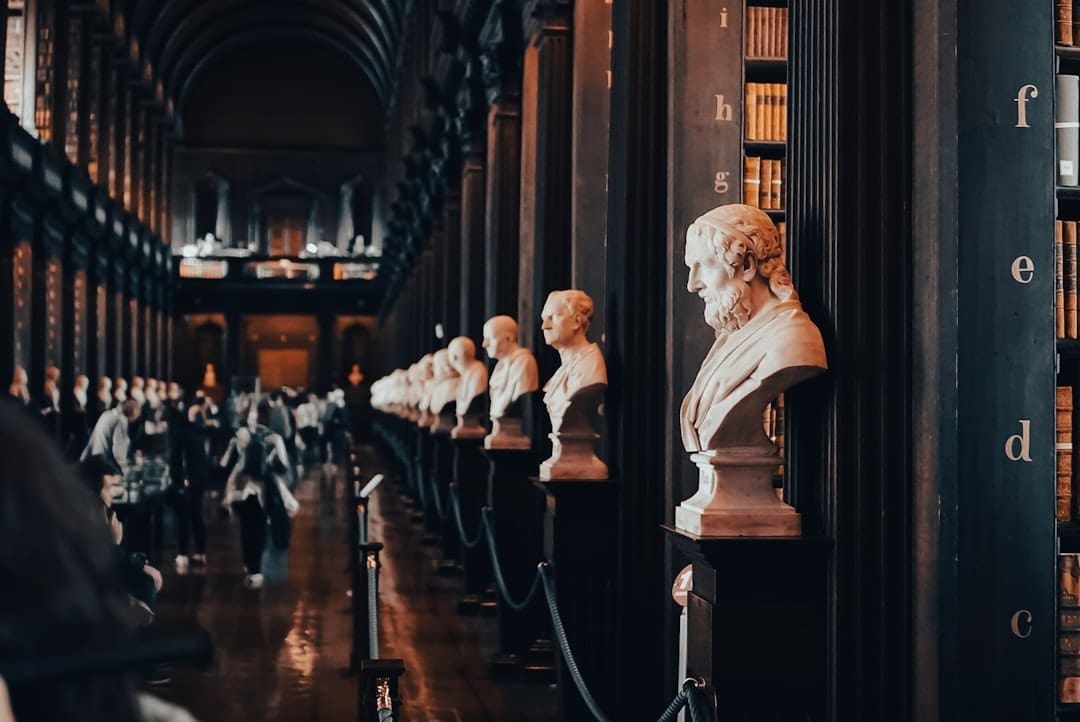
The emerald isle, a land steeped in myth and melody, has long held a special place in my heart, and nowhere is its soul more vibrantly expressed than in its literature. For years, I’ve found myself drawn to the lyrical prose, the profound introspection, and the sheer storytelling prowess that defines Irish writing. It’s a world where the ordinary is infused with the extraordinary, where ancient folklore dances with contemporary anxieties, and where the very language seems to shimmer with a unique magic. My journey into this literary landscape has been one of constant discovery, each author, each poem, each play, peeling back another layer of Ireland’s complex and captivating identity.
My exploration of Irish literature inevitably begins at its very roots, a tapestry woven with the threads of oral tradition and the earliest written records. It’s a period that feels both distant and remarkably present, a foundation upon which all subsequent Irish writing is built.
The Power of the Bardic Tradition
Before the advent of widespread literacy, the bards were the keepers of history, the entertainers, and the chroniclers of societal values. Their poems, often performed in elaborate meters and imbued with rich imagery, celebrated heroes, lamented losses, and even satirized the powerful. I’ve spent countless hours poring over translations of these ancient verses, marveling at their intricate structure and the raw emotion they convey. The myths of Cú Chulainn, of the Tuatha Dé Danann, and the tales of Fionn mac Cumhaill are not just stories; they are foundational narratives that have shaped the Irish psyche for centuries. Reading them, I feel a profound connection to a lineage of storytellers, to a time when the spoken word held immense sway. The vivid descriptions of battles, the complex genealogies, and the explorations of fate and destiny resonate deeply, offering a glimpse into a world governed by different principles than our own, yet still remarkably human in its joys and sorrows.
The Emergence of Written Records: Annals and Sagas
As Christianity took hold and monasteries became centers of learning, the written word began to flourish. The Irish Annals, such as the Annals of Ulster and the Annals of the Four Masters, provide invaluable, albeit often fragmented, accounts of Ireland’s history. While not strictly literature in the modern sense, they are crucial for understanding the historical context of later works. My fascination lies in their stark, factual reporting, which often carries a peculiar poignancy. The concise entries detailing raids, famines, and the reigns of kings create a mosaic of a nation constantly in flux. Alongside these historical records, we have the great sagas, like the Ulster Cycle and the Fenian Cycle, which further developed the heroic narratives, weaving them into intricate plotlines and exploring themes of loyalty, betrayal, and the consequences of ambition. These tales, for me, are the bedrock of Irish storytelling, providing archetypes and motifs that continue to echo in contemporary literature.
Irish literature has a rich and diverse history, reflecting the complexities of its culture and society. A fascinating article that delves into the themes and influences of contemporary Irish writers can be found at this link. It explores how modern authors draw upon traditional narratives while also addressing current social issues, showcasing the dynamic evolution of Irish storytelling.
The Golden Age of Irish Prose and Poetry: A Flourishing of National Identity
The centuries that followed saw a dramatic flowering of Irish literature, particularly during a period of intense cultural and political upheaval. This era, for me, is where the true richness of Irish storytelling began to reveal itself in its most enduring forms.
The Rise of the Novel and Short Story: O’Flaherty, Joyce, and Others
The novel and the short story, as we understand them today, found fertile ground in Ireland. Authors like Liam O’Flaherty, with his visceral depictions of the West of Ireland and its rugged inhabitants, or the groundbreaking experimentation of James Joyce, who revolutionized narrative technique, represent the pinnacle of this development. Reading Joyce’s Dubliners, I felt an almost suffocating intimacy with the city and its inhabitants, a raw portrayal of everyday life that was both beautiful and bleak. His exploration of the “paralysis” of Dublin was a revelation, a deeply Irish form of existential dread that resonated with me on a personal level. Beyond Joyce, there are so many other voices: the sharp wit of Maeve Binchy, the lyrical prose of Colm Tóibín, and the powerful social commentary of Edna O’Brien. Each author offers a unique lens through which to view the Irish experience, from the rural west to the bustling capital.
The Poetic Landscape: Yeats, Heaney, and the Power of Language
Irish poetry, for me, is akin to looking at a perfectly cut gemstone, each facet catching the light in a different way. W.B. Yeats, with his mystical visions, his engagement with Irish mythology, and his masterful command of language, is an undeniable giant. His poems often possess a haunting beauty, a sense of the eternal woven into the fabric of the temporal. I find myself returning to poems like “The Second Coming” for their prophetic power and “Sailing to Byzantium” for its philosophical depth. Then there is Seamus Heaney, a Nobel laureate whose work is deeply rooted in the rural landscape of Northern Ireland. His ability to evoke the sensory details of peat bogs, farm life, and the rhythms of the earth is unparalleled. Reading Heaney, I feel the weight of history, the dignity of labor, and the quiet strength of ordinary people. His poems are not just beautiful; they are deeply resonant, offering a profound connection to the land and its people. Other poets like Eavan Boland, whose feminist perspective offered a crucial re-examination of Irish history and identity, and Patrick Kavanagh, who celebrated the beauty of the mundane, have also left an indelible mark on my appreciation of Irish verse.
The Theatrical Tradition: Synge, O’Casey, and the Voice of the People
Ireland’s contribution to world theatre is immense, a tradition that often grapples with social injustice, political turmoil, and the complexities of Irish identity. J.M. Synge’s plays, with their rich, vernacular dialogue and raw, often tragic, portrayals of rural life, are particularly compelling. The Playboy of the Western World, despite its initial controversy, remains a masterful exploration of the nature of heroism and storytelling itself. Sean O’Casey’s Dublin Trilogy – The Shadow of a Gunman, Juno and the Paycock, and The Plough and the Stars – offers a vivid and unflinching look at the lives of working-class Dubliners during the turbulent years of the Irish War of Independence and the Civil War. His ability to blend pathos and humor, to capture the resilience and the despair of his characters, is simply extraordinary. I find myself moved by the tragic figures of Juno and Captain Boyle, their lives a microcosm of the struggles faced by so many. The power of these plays lies in their authentic voices, their ability to make me feel the grit of the streets and the weight of their burdens.
The Irish Diaspora and the Global Echoes of Home
The story of Irish literature is inextricably linked to the story of emigration. For centuries, Irish people have left their homeland, carrying their stories and their unique cultural heritage with them. This diaspora has enriched the literary landscape of many countries and, in turn, brought new perspectives back to Irish writing.
Voices from Across the Atlantic: American and Canadian Irish Literature
When I think of the Irish diaspora, my mind immediately goes to the vibrant literary traditions that have emerged in countries like the United States and Canada. Writers of Irish descent have often explored themes of displacement, the search for identity, and the lingering pull of the homeland. Authors like Frank McCourt, whose searing memoir Angela’s Ashes brought the stark realities of poverty in Limerick to a global audience, are a testament to the enduring power of Irish stories told from abroad. His unflinching honesty and his ability to find humor even in the darkest of circumstances are deeply affecting. Similarly, in Canada, writers like Alice Munro, while not exclusively Irish, often touch upon themes of rural life and inherited traditions that resonate with the Irish sensibility. I find it fascinating how these diasporic voices often offer a unique perspective, a longing for a homeland they may have never known or have only faint memories of, yet which continues to shape their artistic output.
The Influence of Immigration on Contemporary Irish Writing
In recent decades, Ireland has also become a destination for immigrants, and this has added new layers of complexity and richness to its literary scene. Contemporary Irish writers are increasingly exploring themes of multiculturalism, identity in a globalized world, and the challenges of integration. Authors are engaging with the experiences of newcomers, weaving their stories into the broader narrative of modern Ireland. This cross-pollination of cultures is, for me, a sign of a dynamic and evolving literary landscape, one that is constantly adapting and reflecting the changing face of the nation. It’s a testament to Ireland’s enduring ability to absorb and transform, to find common ground and to celebrate diversity.
Sure, here is the sentence with the clickable link:
Check out the amazing features of Story Bible Studio for all your storytelling needs.
Themes and Motifs: The Enduring Spirit of Irish Storytelling
As I delve deeper into Irish literature, certain themes and motifs emerge, recurring threads that bind together the vast and varied tapestry of its writing. These are the elements that, for me, define the very essence of the Irish literary spirit.
The Enduring Power of Place: Landscape and Homeland
The Irish landscape is more than just a setting; it is a character in its own right, a source of inspiration and a powerful symbol of identity. From the wild Atlantic coast to the rolling green hills, the land is imbued with history, folklore, and a deep sense of belonging. I find myself captivated by the way authors describe the land, the way it shapes the lives and the imaginations of its people. The stark beauty of the Aran Islands, the ruggedness of Connemara, the ethereal quality of the Burren – these places are etched into the consciousness of Irish writers and find their way into countless poems, novels, and plays. It’s a love affair with the soil, a profound connection to the earth that sustains them, a source of both comfort and melancholy.
The Specter of History and the Weight of the Past
History, both real and imagined, looms large in Irish literature. The legacy of colonization, rebellion, famine, and partition continues to inform the narratives of many writers. This engagement with the past is not merely academic; it is a deeply personal and often painful exploration of how history shapes individual lives and national identity. I am struck by the recurring themes of memory, trauma, and the struggle to reconcile with a complex and often traumatic past. The stories of rebellion and resistance, of heroes and martyrs, are interwoven with tales of ordinary lives lived amidst extraordinary circumstances. It’s a testament to the resilience of the human spirit, the ability to carry the weight of the past while still striving for a better future.
The Mystical and the Mythological: Folklore and the Unseen World
Ireland has always been a land where the veil between the mundane and the magical seems thinner. Folklore, mythology, and a belief in the unseen have profoundly influenced its literature. From the ancient tales of the Tuatha Dé Danann to the lingering superstitions of rural life, the mystical permeates Irish storytelling. I find myself drawn to the stories of fairies, of ghosts, and of the ancient spirits that are said to inhabit the land. This element adds a layer of enchantment and wonder to Irish literature, a sense that there is more to the world than meets the eye. It’s a reminder that even in the face of hardship, there is always room for wonder, for imagination, and for the embrace of the extraordinary.
The Paradox of Identity: Belonging and Exile
The question of Irish identity is a complex and multifaceted one, often explored through the lens of belonging and exile. For centuries, many Irish people have been forced to leave their homeland, leading to a constant negotiation of what it means to be Irish, both at home and abroad. This theme of exile, of the longing for a lost home, is a powerful recurring motif. I find myself empathizing with characters who grapple with their sense of self, their place in the world, and their connection to a homeland that may be physically distant but remains deeply embedded in their souls. This exploration of identity is not static; it is a fluid and evolving concept, reflecting the changing nature of Ireland itself and the experiences of its people.
Irish literature has a rich and diverse history, showcasing the unique cultural and social landscape of Ireland through its poetry, prose, and drama. One fascinating aspect of this literary tradition is the exploration of identity and belonging, which can be seen in the works of renowned authors such as James Joyce and W.B. Yeats. For those interested in delving deeper into this topic, a related article can be found at Enda Storrie’s website, where you can discover more about the influences and themes that shape Irish literary works.
The Future of Irish Literature: New Voices, New Stories
As I look towards the future, I am filled with anticipation for the new voices and the fresh perspectives that will continue to shape Irish literature. The literary landscape is constantly evolving, and I am excited to see where it will lead.
Emerging Writers and Contemporary Trends
I am always on the lookout for emerging Irish writers, those who are pushing the boundaries of genre and exploring new thematic territories. The current literary scene is vibrant, with a focus on diverse experiences, challenging societal norms, and engaging with the complexities of the modern world. I see a growing interest in speculative fiction, in exploring the intersections of technology and identity, and in re-examining historical narratives from new vantage points. The digital age has also opened up new avenues for storytelling, and I am eager to see how these platforms will influence the future of Irish literature.
The Enduring Appeal of Irish Storytelling
Despite the changing world, I believe that the enduring appeal of Irish storytelling will remain. The inherent human need for connection, for understanding, and for the magic of a well-told tale is universal. The ability of Irish writers to tap into profound emotions, to create unforgettable characters, and to imbue their work with a unique sense of place and culture ensures that their stories will continue to resonate with readers for generations to come. My own journey through Irish literature has been a deeply enriching one, a testament to the power of words to transport, to enlighten, and to connect us to something larger than ourselves. The emerald isle, through its literature, continues to whisper its tales, and I will always be here, listening.
